
Please note: This website contains affiliate links. As an Amazon Associate, we earn from qualifying purchases at no additional cost to you.
RECAP: If you’re taking Ozempic, Wegovy, Zepbound, or Mounjaro, eating enough protein can feel surprisingly difficult. The goal of this article isn’t to help you eat more food—it’s to help you get more protein from the food you’re already eating. We’ll focus on protein-dense foods, easy ingredient swaps, convenient grab-and-go options, and simple ways to boost protein without increasing meal size.
The Protein Struggle is Real on GLP-1 Medications.
If you’re on Ozempic, Wegovy, Zepbound, or Mounjaro, you’ve probably noticed something weird—you’re eating way less, but somehow, everyone keeps telling you to eat more protein.
Why? Because losing weight too fast without enough protein = muscle loss.
And muscle loss = a slower metabolism, lower energy, and looking “soft” instead of strong.
Not the goal.
But here’s the problem: hitting your protein goals when you’re barely hungry feels impossible. The last thing you want is to force down giant portions of chicken breast when you’re already full.
So, let’s talk about how to get enough protein on GLP-1 meds WITHOUT stuffing yourself—because yes, it’s totally possible.
Why Protein is a Non-Negotiable on GLP-1 Medications
Protein is the key to fat loss without muscle loss. Here’s why it matters more than ever when you’re on GLP-1s:
- Preserves muscle mass while losing fat (so you don’t just get “skinny fat”)
- Keeps you full longer (so you don’t deal with random hunger spikes)
- Supports metabolism (muscle burns more calories than fat)
- Aids recovery if you’re exercising (especially for strength training)
The problem? Most people aren’t eating nearly enough protein, especially when their appetite drops on GLP-1 medications.
The solution? Sneaky, easy ways to increase protein without feeling like you’re overeating.
Check out: PROTEIN 101: How Much Protein Should You Eat on Ozempic or Wegovy?
If you’re experiencing the kind of appetite suppression where even protein shakes feel overwhelming, you may find our guide on how to eat 100 grams of protein when you have absolutely no appetite more helpful.
How to Hit Your Daily Protein Goals Without Overeating
Focus on Protein-Dense Foods (More Protein, Less Volume)
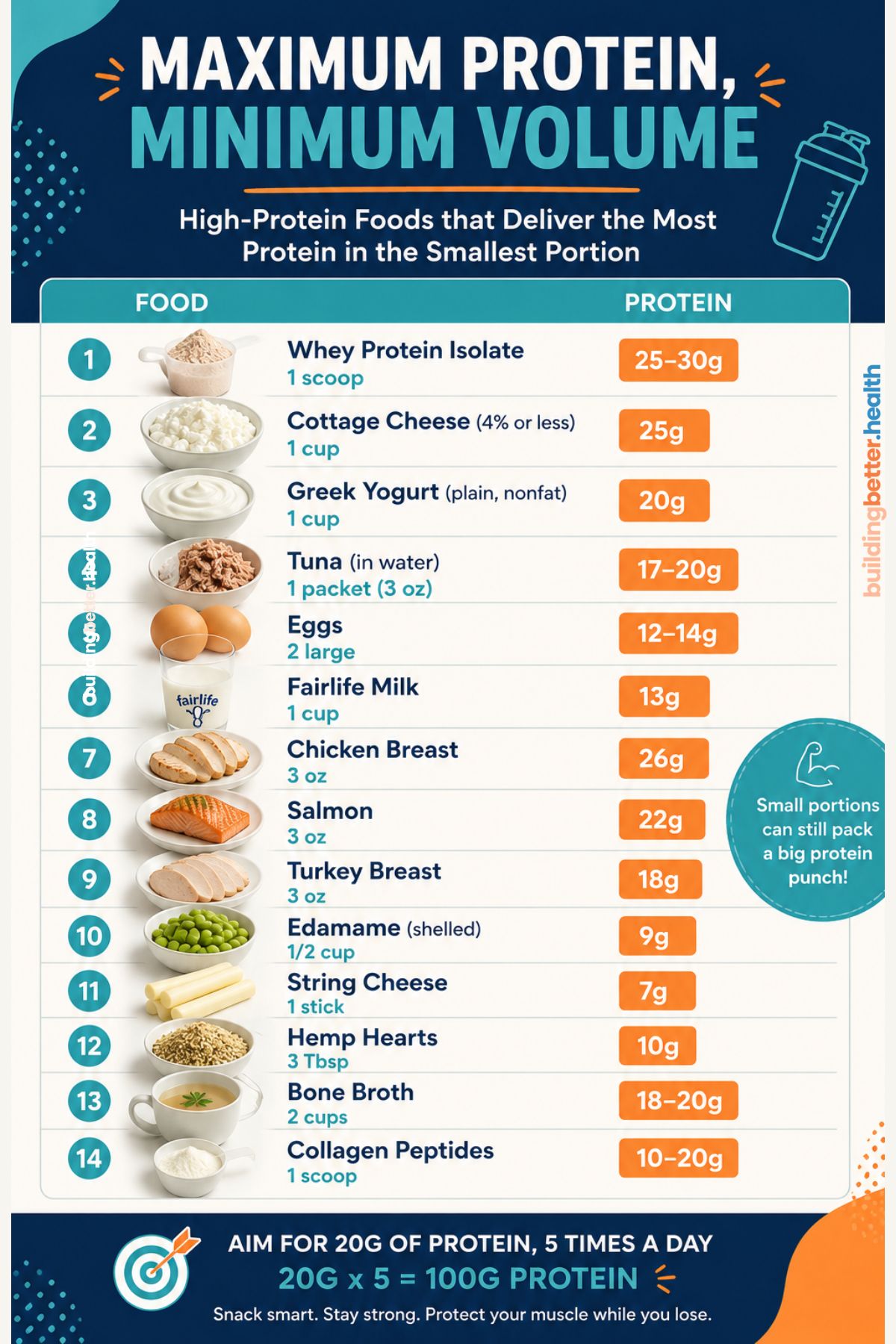
If you’re struggling to eat enough protein, make every bite count. Some foods pack a ton of protein into a small serving, so you get more without feeling overly full.
Best high-protein, low-volume foods:
- Eggs → 6g per egg
- Cottage cheese → 14g per ½ cup
- Greek yogurt → 15-20g per cup
- Cheese sticks → 7g per stick
- Tuna packets → 20g per pouch
- Ground turkey or chicken → 22g per 3 oz
- Whey protein → 25g per scoop
🚀 Pro Tip: Choose foods with at least 10g of protein per serving to maximize protein without extra bulk.
Swap Low-Protein Foods for High-Protein Versions
One of the easiest ways to increase protein without eating more food is to swap out low-protein ingredients for high-protein alternatives.
✔ Greek yogurt instead of regular yogurt → Doubles the protein
✔ Cottage cheese instead of sour cream → 5x the protein
✔ High-protein wraps instead of regular tortillas → Adds 10g of protein
✔ Protein pasta instead of white pasta → Adds 15g of protein (we really like Banza – see below)
✔ Quinoa instead of rice → More protein + fiber
High Protein Pasta

Banza Pasta - High Protein, Gluten Free, and Lower Carb Protein
Shop on Amazon
$13.28
We earn a commission if you make a purchase, at no additional cost to you.
06/16/2026 08:02 pm GMT
Small swaps add up fast and help you get enough protein without eating extra volume.
PRO TIP: If you don’t love the texture of cottage cheese, try putting it in a blender – makes a HUGE difference! Also, there is a newer brand of cottage cheese called “Good Culture” that is very creamy and I don’t even need to put it in the blender.
Drink Your Protein (Because Eating Might Feel Like Too Much Effort)
If you’re not feeling hungry, drinking protein is a game-changer. Liquids digest faster and don’t feel as heavy as solid food. I’ve been on a GLP-1 medication for over a year and there are at least two days each week, where I have to drink most of my protein, because I just don’t feel like eating.
Easy high-protein drinks:
- Protein shakes (whey, collagen, or plant-based) → 20-30g protein
- High-protein smoothies → Greek yogurt, protein powder, almond milk
- Fairlife or Premier Protein shakes → Pre-made, 30g protein
- Fairlife does have a “Core Power” brand with 40g+ of protein, but I think the regular Fairlife with 30g tastes much, much better
- Bone broth → 10g protein + gut health benefits
🚀 Pro Tip: If you struggle with solid food in the morning, start your day with a protein shake. Here are some of our favorite high protein smoothies and shake recipes:
- 7 Best Protein Shake Recipes
- 25+ High Protein Smoothie Recipes that Taste Like Dessert
- High-Protein Cottage Cheese Smoothie (40g Protein)
Add Protein to Foods You’re Already Eating
You don’t have to eat more meals to get more protein—just add protein to what you’re already eating.
✔ Add whey or collagen protein to coffee → No taste, 10-15g protein
✔ Mix protein powder into oatmeal → Adds 20g protein
✔ Stir cottage cheese into scrambled eggs → Extra 10g protein
✔ Sprinkle hemp or chia seeds on yogurt or salads → Adds 5g protein
✔ Use nut butters or powdered peanut butter in smoothies → Extra protein & healthy fats
Little tweaks like this sneak in more protein without increasing meal size.
PRO TIP: For the last few months, I’ve been adding Pea Protein (unflavored) to different foods and you don’t taste it at all. Really impressed as it’s an affordable option as well.
Eat Smaller, Protein-Focused Snacks Throughout the Day
If big meals feel like too much, smaller high-protein snacks throughout the day can help you hit your protein goals without overeating.
Best high-protein snack ideas:
- Cottage cheese with berries (15g protein)
- String cheese + almonds (12g protein)
- Hard-boiled eggs with hot sauce (12g protein)
- Tuna pouch with whole-grain crackers (20g protein)
- Roasted chickpeas (8g protein)
- Beef or turkey jerky like Chomps (10g to 15g protein)
🚀 Pro Tip: If you’re too full for meals, aim for 2-3 small high-protein snacks instead.

CHOMPS Pepperoni Turkey Jerky Meat Snack Sticks (10 Pack)
Shop on Amazon
High Protein, Sugar Free, Gluten Free, 60 Calories
We earn a commission if you make a purchase, at no additional cost to you.
Prioritize Protein First in Every Meal
When you’re on GLP-1s, your appetite is lower, so what you eat first matters.
✔ Eat protein FIRST, then veggies, then carbs.
✔ If you get full quickly, at least you’ve hit your protein goal.
✔ Skip the “filler” foods and focus on the essentials.
🚀 Pro Tip: Start meals with a few bites of protein before anything else to make sure you’re getting enough before you get full.
Use Pre-Cooked, High-Protein Convenience Foods
If cooking feels like too much work, use pre-cooked, grab-and-go protein sources that take zero effort.
✔ Rotisserie chicken → Already cooked, high in protein
✔ Pre-cooked hard-boiled eggs → Easy snack, 6g protein each
✔ Tuna or salmon packets → No cooking, 20g protein
✔ Greek yogurt cups → Portable and high in protein
✔ Pre-made protein shakes → Fast and easy protein boost
🚀 Pro Tip: Keeping pre-cooked proteins in the fridge makes hitting your protein goals effortless.
GLP-1 Daily Protein Goals: Common FAQs
How much protein should you eat on GLP-1 medications?
Most experts recommend aiming for roughly 80 to 120 grams of protein per day while taking GLP-1 medications such as Ozempic, Wegovy, Zepbound, or Mounjaro, although your exact needs depend on factors like age, body size, activity level, and weight loss goals. Protein becomes especially important during weight loss because it helps preserve muscle mass while your body burns fat.
Why is protein so important on Ozempic, Wegovy, and Zepbound?
GLP-1 medications reduce appetite, which often causes people to eat significantly less overall. Without enough protein, some of the weight you lose may come from muscle instead of fat. Prioritizing protein helps support muscle retention, metabolism, energy levels, and recovery while losing weight.
How can I eat more protein on GLP-1 without eating more food?
The easiest approach is to focus on protein density rather than portion size. Choose foods that provide a large amount of protein in a small serving, such as Greek yogurt, cottage cheese, eggs, tuna packets, protein shakes, and lean meats. Ingredient swaps, protein powders, and high-protein convenience foods can also increase protein intake without increasing meal volume.
What are the best high-protein foods for people who get full quickly on GLP-1 medications?
Some of the most protein-dense foods include Greek yogurt, cottage cheese, eggs, tuna packets, salmon, Fairlife milk, protein shakes, rotisserie chicken, turkey, and jerky. These foods deliver a large amount of protein without requiring large portions.
Should you eat protein first on GLP-1 medications?
Yes. Because GLP-1 medications slow stomach emptying and increase fullness signals, many people become full before finishing their meals. Eating protein first helps ensure you get the nutrients your body needs before moving on to vegetables, starches, or lower-protein foods.
Are protein shakes good for GLP-1 users?
Protein shakes are often one of the easiest ways to increase protein intake while taking GLP-1 medications. Many people find drinking protein much easier than eating solid food, especially on days when appetite is low or nausea is present. Ready-to-drink options like Fairlife and Premier Protein can be especially convenient.
What if I still can’t eat enough protein on GLP-1 medications?
If appetite suppression becomes severe and even small meals or protein shakes feel overwhelming, focus on liquid protein sources and very small protein-rich foods throughout the day. You may also benefit from strategies such as mechanical eating or the 20×5 method, where you spread protein intake across several smaller eating opportunities rather than trying to eat large meals.
Final Thoughts: You Can Hit Your Protein Goals Without Overeating
If eating large meals sounds impossible on GLP-1s, don’t worry—you don’t have to force yourself.
✔ Focus on protein-dense foods (more protein, less volume)
✔ Make easy ingredient swaps to increase protein effortlessly
✔ Drink protein if solid food feels like too much
✔ Add protein to foods you’re already eating
✔ Snack on high-protein options throughout the day
✔ Prioritize protein first in every meal
Please note: This website contains affiliate links. As an Amazon Associate, we earn from qualifying purchases at no additional cost to you.