




Please note: This website contains affiliate links. As an Amazon Associate, we earn from qualifying purchases at no additional cost to you.
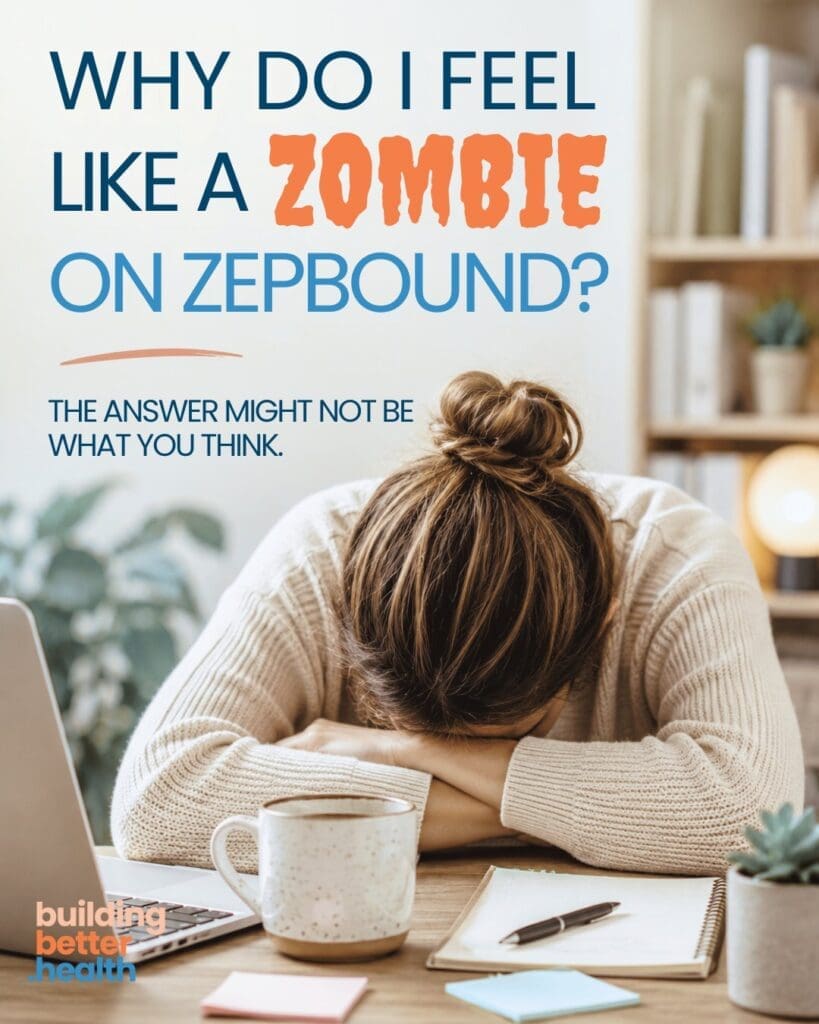
If you are reading this while curled up on the couch, staring at the wall, completely drained of the will to move—I see you.
I know that exact feeling. You start Zepbound (or Wegovy, or Mounjaro), and at first, it feels like an absolute miracle. The constant, intrusive food noise that dictated your entire day suddenly vanishes. The scale finally starts moving in the right direction. You feel like you’ve unlocked a cheat code for your health.
But then, a few weeks or months in, a heavy fog rolls in.
Suddenly, walking up a flight of stairs feels like scaling Mount Everest. Getting out of bed requires a pep talk. You find yourself asking: Is this the price I have to pay? Do I have to choose between losing weight and actually having the energy to live my life?
When I hit this wall myself, I kept hearing the same advice online: “Oh, extreme fatigue is just a normal side effect of the shot. Push through it.” But as someone who loves data and refused to just accept feeling like a zombie, I started digging deeper. What I discovered changed everything for my journey, and it might just be the missing puzzle piece for yours, too.
Your crushing exhaustion might not be a direct chemical side effect of the medication at all. In many cases, it’s something far more fixable.
Why Does Zepbound Make You So Tired?
Here’s the thing nobody tells you: “Zepbound fatigue” usually isn’t one problem. It’s a stack of them. And before we get to the sneaky one — the nutrient crash that standard blood panels miss — you have to rule out the simple stuff first, because for a lot of people, the simple stuff IS the answer.
- You may simply be eating too little. Zepbound cuts your appetite so effectively that many of us drift well below the calories our bodies need to function — without even noticing, because we’re never hungry. A calorie deficit causes weight loss; a crash-level deficit causes exhaustion. If you’re regularly eating like a bird and can’t remember your last full meal, start there.
- You’re probably drinking less than you think. Hunger and thirst signals are tangled together, and when the medication mutes one, it often mutes the other. Mild dehydration reads as fatigue long before it reads as thirst — here’s how to spot the signs. And it’s not just water: when you eat less food, you take in fewer electrolytes, and low sodium/potassium/magnesium feels exactly like being hit by a truck. This is why electrolyte powders are one of my most-used Zepbound tools.
- Protein may be falling short. When you can only eat a little, and that little is crackers or cereal, your muscles pay the bill. Here’s how much protein you should actually be eating — most of us on GLP-1s need to treat it as job one at every meal.
- And check your sleep. Weight loss phases stress the body, and if your sleep routine is ragged, no supplement on earth will out-supplement it.
If you’ve genuinely got those four covered and you still feel like a zombie? Then we need to talk about the layer underneath — the one I had to find out about the hard way.
The GLP-1 Paradox: Happy Brain, Starved Cells
To understand the deeper problem, look at how these medications work. Zepbound slows down your stomach’s digestion (gastric emptying) and signals your brain that you are full. It is an incredible biological tool.
But it also creates a basic math problem.
If your appetite is cut by 50% or 60%, you are naturally eating a fraction of the food you used to. That’s exactly what creates the calorie deficit needed for weight loss — but it also means you’ve accidentally slashed your intake of vital vitamins and minerals by more than half. Your multivitamin-in-food-form just got cut to a half dose without anyone deciding it.
Think of your body like a car. You might be putting just enough fuel in the tank to keep it rolling, but you’ve run low on oil and coolant. Your cells are missing the tools they need to actually produce energy.
When food volume drops that drastically, two nutrients are among the first to slide: iron and vitamin B12.
1. The Iron Slide (Why Your Stamina Disappeared)
Let’s talk about iron first, because when this drops, your physical stamina goes right out the window. Iron is the primary building block for hemoglobin — the protein in your red blood cells that carries oxygen to your brain and muscles.
Less iron means less oxygen circulating. The result? You feel like you’re walking through wet cement.
Why does iron slide on Zepbound? Mostly, it’s what’s on the plate — or rather, what isn’t anymore:
The “heavy food” aversion. If you’re like me, your taste buds changed on this medication. The richest iron sources — red meat, steak, dark poultry — are often exactly the foods that suddenly feel too heavy or unappealing. Many of us quietly stop eating our main iron sources without ever noticing the swap.
Half the food, half the iron. Even without aversions, eating 50% less food means roughly 50% less dietary iron, week after week. Iron stores drain slowly, which is why this fatigue creeps in over months instead of days.
If you’re experiencing brittle nails, feeling unusually cold all the time, or getting out of breath doing basic household chores, a quiet iron slide could be the culprit.
2. The Vitamin B12 Blind Spot (The Cellular Battery Drain)
If low iron drains your body, low B12 drains your brain. B12 is essentially the spark plug of your nervous system — it keeps nerve cells healthy, helps create red blood cells, and turns the food you eat into usable energy.
The B12 problem on a GLP-1 is mostly the same math problem: B12 lives almost entirely in animal foods — meat, fish, eggs, dairy — which are the exact foods that shrink most when portions shrink and heavy proteins lose their appeal. Some researchers also wonder whether dramatically slowed digestion affects how well we absorb B12, though that’s still an open question. Either way, the intake math alone is enough to cause a slide.
And the symptoms of low B12 look almost identical to what people call “Zepbound fatigue”:
- Total mental exhaustion and deep brain fog
- Feeling moody, irritable, or strangely unmotivated
- Mild tingling or a “sleepy” feeling in your hands and feet
Couple low B12 with low iron, and you get the ultimate energy storm.
Is It the GLP-1 Shot, or Is It a Nutrient Deficiency?
It can be hard to tell what’s causing what when you’re in the thick of it. Here’s the rule of thumb I use to troubleshoot:
- Medication fatigue typically hits like a wave 24 to 48 hours after your weekly injection, when the medication peaks in your system, then lifts as the week goes on. (If you’re not sure when your levels peak, here’s how Zepbound dosing and timing works.) By day 5 or 6, your energy starts to bounce back.
- Nutrient deficiency fatigue is a slow, heavy, creeping exhaustion. It doesn’t care what day of the week it is. It stays constant, day in and day out, because your cellular reserves are running on empty.
One follows your injection calendar. The other follows you everywhere. That distinction is the single most useful diagnostic clue you can bring to your doctor.
How to Get Your Spark Back: The Recovery Protocol
The good news? You don’t have to just suffer through this, and you don’t have to quit your medication. Here’s the approach that helped me reclaim my energy:
1. Get the right labs FIRST
At your next check-up, don’t let them run a standard panel and tell you “everything looks normal.” Ask explicitly for your vitamin B12 level and your ferritin level — ferritin measures your body’s stored iron and catches a deficiency long before it shows up on a standard anemia test.
And here’s the part I need to say clearly: test before you supplement — especially with iron. Unlike many vitamins, excess iron isn’t harmless; your body has no easy way to get rid of it. Taking iron “just in case” without labs is how people trade one problem for another. The labs are cheap, the appointment is quick, and then you’re treating facts instead of guesses.
2. Make your “micro-meals” count
Since you can only eat small amounts, every single bite has to pull its weight. If red meat feels too heavy right now, pivot to lighter, easily digestible sources of iron and B12: eggs, light seafood like shrimp or tuna, or lean ground turkey. A high-protein breakfast is the easiest place to bank both nutrients before the day gets away from you — or blend them invisible in a cinnamon roll high-protein smoothie.
3. Supplement smarter (skip the massive pills)
If your labs do come back low, work with your doctor on repletion — and be smart about the form, because a slow stomach changes the rules. Swallowing a giant, rock-hard multivitamin on Zepbound is a recipe for instant nausea.
For B12, a liquid sublingual (under-the-tongue) B12 absorbs through the tissues in your mouth, completely bypassing your slow-moving digestive tract.
For iron, ask about a gentle iron bisglycinate formulation, which is far easier on digestion than standard iron pills and won’t cause the dreaded constipation that ferrous sulfate is famous for.
New to reading supplement labels? Here’s what to know before you buy anything, and these vitamins support energy during weight loss more broadly.
FAQ: Zepbound Fatigue
Does Zepbound fatigue go away?
For most people, yes — injection-related fatigue tends to ease as your body adjusts to each dose, usually within a few weeks of a dose change. Fatigue that persists for months and doesn’t follow your injection schedule is worth investigating with labs, because ongoing nutrient shortfalls don’t fix themselves.
How long does Zepbound fatigue last after injection?
Medication-related tiredness typically peaks 24–48 hours after your shot and fades over the following days. If your exhaustion is constant regardless of injection day, look beyond the medication.
What helps Zepbound fatigue immediately?
Start with the fast levers: a full glass of water with electrolytes, a protein-forward meal or snack, and a short walk (movement paradoxically raises energy). Then work the bigger levers: enough total calories, consistent sleep, and labs to check B12 and ferritin.
Should I take vitamins on Zepbound?
Many GLP-1 users benefit from targeted supplementation, but test before you invest — especially with iron, where more is not better. Ask your doctor for B12 and ferritin labs first, then supplement based on your actual numbers.
You Don’t Have to Choose
We started this journey to build a better, healthier, more vibrant life — not to become shadows of ourselves who are too tired to enjoy the progress we’re making.
Listen to your body. It isn’t failing you; it’s telling you it needs a little extra structural support while it does the heavy lifting of losing weight. Rule out the simple stuff, get the right labs, give it the nutrients it’s actually missing — and let’s get your energy back.
This article shares personal experience and general information; it is not medical advice. Fatigue can have many causes, including some that need prompt medical attention. Talk to your doctor before starting any supplement — especially iron — and never adjust your medication dose on your own.
Please note: This website contains affiliate links. As an Amazon Associate, we earn from qualifying purchases at no additional cost to you.