
Please note: This website contains affiliate links. As an Amazon Associate, we earn from qualifying purchases at no additional cost to you.
If you’re a vegetarian taking Ozempic®, Wegovy®, Zepbound®, or another GLP-1 medication, you’ve probably discovered that getting enough protein isn’t always as simple as people make it sound.
When your appetite disappears after an injection, the advice to “just eat more protein” can feel downright impossible. After all, there’s only so much Greek yogurt and tofu one person can eat before you start looking for new ideas.
The good news is that you don’t have to completely reinvent your diet—or force yourself to eat giant meals—to reach your protein goals. In many cases, a few smart ingredient swaps or simple additions can increase the protein in meals you’re already eating by 10, 15, or even 20 grams without adding much extra volume. That’s especially helpful on GLP-1 medications, where smaller, protein-rich meals often feel much more manageable than oversized portions.
In this article, you’ll discover 15 practical protein-boosting ideas that can help you get more nutrition from every bite. Whether your goal is preserving muscle, staying fuller longer, or working toward 100 grams of protein a day, these easy upgrades can help you get there without making meals more complicated.
You’ll Learn:
- About protein layering is and why it works so well on GLP-1 medications.
- Discover 15 easy ways to add an extra 10–20 grams of protein to meals you’re already eating.
- Find simple vegetarian protein ideas that don’t require complicated recipes.
- Get practical tips for low-appetite days when eating feels like a chore.
- See how a handful of small changes can add 50 or more grams of protein throughout your day.
What Exactly Is Protein Layering?
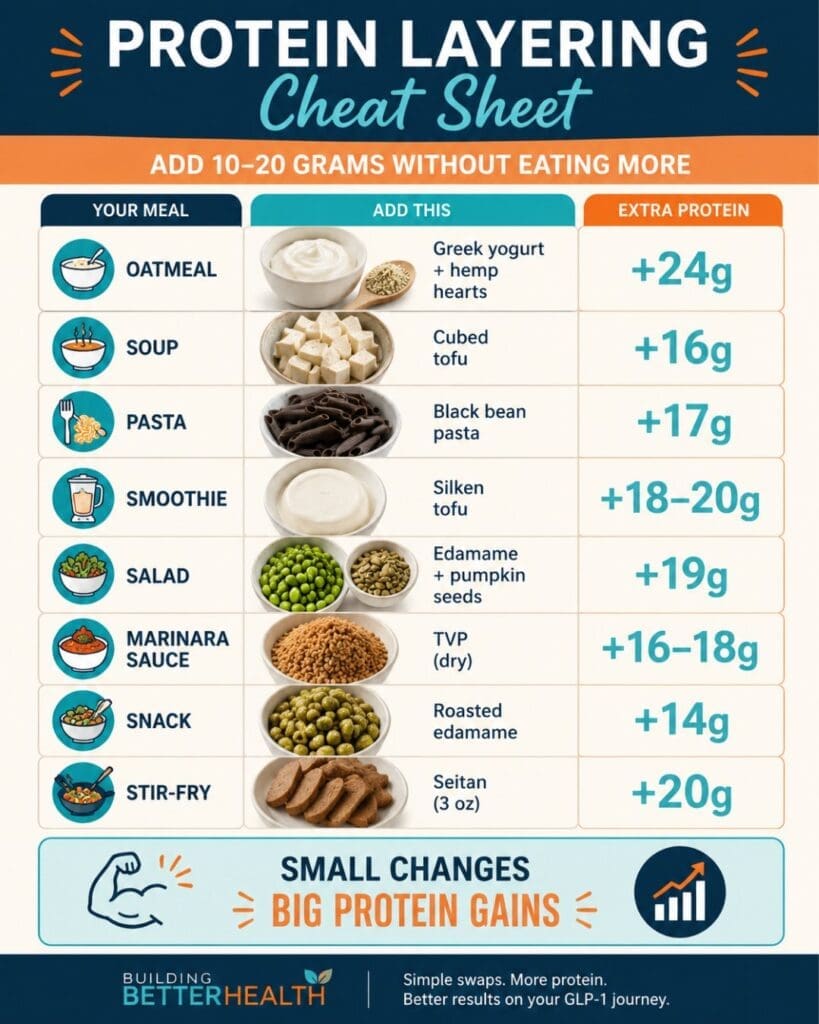
One of the biggest misconceptions about eating enough protein is that every meal needs one giant protein source. In reality, it’s often much easier—and much more realistic—to build protein in layers.
Think of it this way: instead of trying to find one food with 30 grams of protein, you combine two or three foods that naturally go well together. A scoop of Greek yogurt here, a handful of edamame there, or swapping regular pasta for a higher-protein version can dramatically increase the protein in your meal without making it much larger.
This approach works especially well for people taking GLP-1 medications because appetite is often limited. Rather than forcing yourself to eat bigger portions, you’re simply making every bite work a little harder.
Here are a few examples:
| Instead of… | Try This | Extra Protein |
|---|---|---|
| Plain oatmeal | Greek yogurt + hemp hearts | +24g |
| Tomato soup | Cubed tofu + Parmesan | +15–20g |
| Regular pasta | Black bean or edamame pasta | +17g |
| Morning coffee | Protein shake instead of creamer | +20–30g |
These small upgrades may not seem like much on their own, but they add up surprisingly fast.
1. Add Greek Yogurt to Oatmeal
A bowl of oatmeal is a comforting breakfast, but it’s relatively low in protein on its own. Stirring Greek yogurt into warm oats after they’ve finished cooking makes them extra creamy while dramatically increasing the protein.
Adds 24 grams of protein
- ¾ cup plain nonfat Greek yogurt: 17g
- 2 tablespoons hemp hearts: 7g
Top with fresh berries, cinnamon, chopped pecans, or a drizzle of honey for a breakfast that keeps you satisfied much longer than plain oatmeal.
Great for GLP-1 users: Warm, comforting meals are often easier to tolerate, and the added protein helps support muscle while keeping portions reasonable.
2. Add Cubed Tofu to Soup
Soup is one of the easiest meals to eat on low-appetite days, but many vegetarian soups don’t contain much protein. Fortunately, that’s easy to fix.
Simply stir cubed extra-firm tofu into your favorite soup during the last few minutes of cooking. It absorbs the flavors of the broth while adding plenty of protein without overpowering the dish.
Adds 16 grams of protein
- 1 cup cubed extra-firm tofu: 16g
This works especially well in:
- Tomato soup
- Butternut squash soup
- Vegetable soup
- Minestrone
- Miso soup
For an even bigger protein boost, finish your bowl with a sprinkle of grated Parmesan cheese.
Great for GLP-1 users: Soft, warm foods are often easier to tolerate during the first few days after your injection.
3. Swap Regular Pasta for High Protein Bean-Based Pasta
If pasta is one of your favorite comfort foods, you don’t have to give it up. Simply choosing a higher-protein pasta can instantly add 15–20 grams of protein before you’ve even added your sauce.
| Pasta | Serving Size | Protein |
|---|---|---|
| Regular pasta | 2 oz dry | 7g |
| Chickpea pasta | 2 oz dry | 20g |
| Black bean pasta | 2 oz dry | 24g |
| Edamame pasta | 2 oz dry | 24–25g |
Choosing black bean or edamame pasta instead of traditional pasta adds roughly 17 extra grams of protein per serving.
For even more protein, blend cottage cheese into your pasta sauce or toss the finished dish with roasted edamame.
4. Turn Your Morning Coffee Into a Protein Coffee
Some mornings, eating breakfast just isn’t appealing. Instead of skipping protein altogether, let your morning coffee do some of the work.
Adds 20–30 grams of protein
Option 1
- 1 ready-to-drink protein shake: 20–30g
Option 2
- 1 scoop protein powder: 20–25g
- 1 cup unsweetened soy milk: 7g
Blend with hot or iced coffee for a creamy drink that helps you start your day with a substantial amount of protein.
5. Add Shelled Edamame to Grain Bowls
Grain bowls are already packed with vegetables, but they’re often light on protein. A cup of shelled edamame is one of the easiest ways to change that.
Adds 17 grams of protein
- 1 cup shelled edamame: 17g
Add it to:
- Burrito bowls
- Quinoa bowls
- Rice bowls
- Stir-fries
- Grain salads
Edamame also provides fiber, iron, and other nutrients, making it one of the most nutritious vegetarian protein sources available. It’s a simple way to increase protein without making your meal significantly larger.
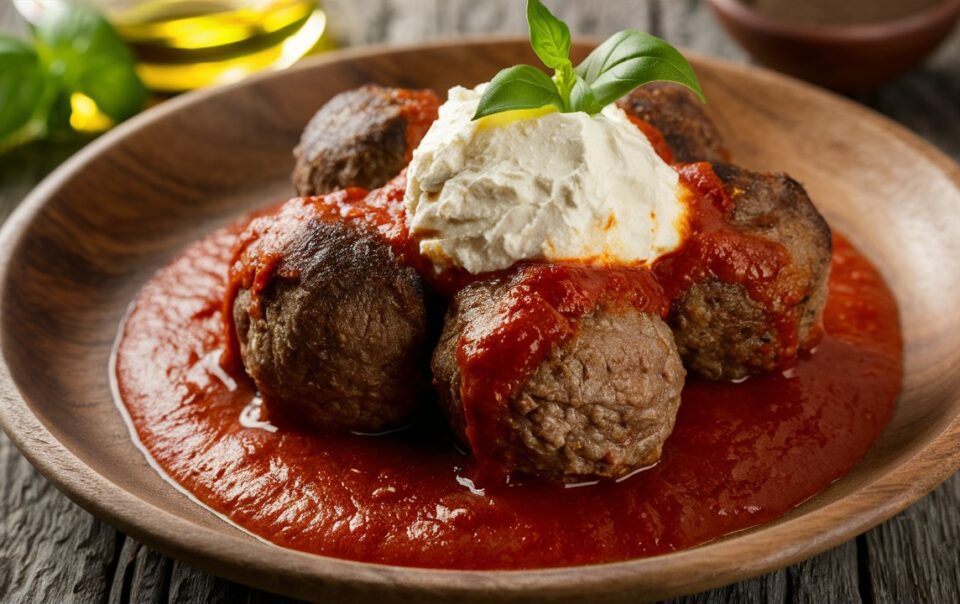
6. Blend Cottage Cheese Into Sauces
This is my almost-daily high protein hack! If you haven’t tried blended cottage cheese yet, you’re in for a surprise. Once pureed, it becomes silky smooth and blends beautifully into tomato sauces, creamy sauces, and even mac and cheese.
Adds 14 grams of protein
- ½ cup low-fat cottage cheese: 14g
Blend until completely smooth, then stir it into:
- Marinara sauce
- Alfredo sauce
- Mac and cheese
- Lasagna filling
The result is a creamy, satisfying sauce with a significant protein boost. And soft, creamy meals are often easier to tolerate than heavier dishes.
7. Stir Greek Yogurt Into Dips and Dressings
Greek yogurt isn’t just for breakfast. It also makes an excellent replacement for sour cream, mayonnaise, and many creamy salad dressings.
Adds 17 grams of protein
- ¾ cup plain Greek yogurt: 17g
Use it to make:
- Ranch dip
- Taco topping
- Veggie dip
- Creamy salad dressing
- Baked potato topping
You’ll increase the protein while reducing saturated fat in many traditional recipes.
TIP: Pair your dip with raw vegetables for an easy, high-protein snack that doesn’t feel overly heavy.
8. Sprinkle Hemp Hearts on Breakfast Foods
Hemp hearts are tiny, but they’re one of the easiest ways to boost the nutrition of foods you’re already eating. Their mild, slightly nutty flavor works well in both sweet and savory dishes.
Adds 10 grams of protein
- 3 tablespoons hemp hearts: 10g
Sprinkle them on:
- Oatmeal
- Greek yogurt
- Cottage cheese
- Smoothies
- Avocado toast
- Cereal
Unlike chia seeds, hemp hearts stay soft, so there’s no need to soak them before eating. They’re an effortless way to increase protein with virtually no extra preparation.
9. Upgrade Your Salad with Protein Layers
A salad can be a great meal on GLP-1 medications—but only if it contains enough protein to keep you satisfied. Instead of relying on lettuce and vegetables alone, layer in a few protein-rich ingredients to turn it into a complete meal.
Adds 19 grams of protein
- 1 cup shelled edamame: 17g
- 1 tablespoon pumpkin seeds: 2g
Try adding them to:
- Mixed green salads
- Spinach salads
- Mediterranean salads
- Chopped vegetable salads
- Grain-based salads
For even more staying power, top your salad with a sprinkle of feta or Parmesan cheese and your favorite vinaigrette. Layering several smaller protein sources often feels much more manageable than trying to eat one large serving of protein.
10. Blend Silken Tofu Into Smoothies
Silken tofu is one of the best-kept secrets for making high-protein smoothies. Unlike extra-firm tofu, it blends into an incredibly smooth, creamy texture without adding a noticeable tofu flavor. Once it’s mixed with fruit, cocoa, coffee, or peanut butter, most people can’t even tell it’s there.
Adds 18–20 grams of protein
- 1 cup silken tofu: 18–20g
Try it in:
- Berry smoothies
- Chocolate peanut butter smoothies
- Coffee smoothies
- Green smoothies with spinach and pineapple
- Mango banana smoothies
Great for GLP-1 users: Smoothies are often easier to tolerate on days when your appetite is low, and silken tofu adds a significant amount of protein without making the drink feel heavy.
11. Add TVP to Pasta Sauce
Textured Vegetable Protein (TVP) is one of the most underrated vegetarian protein foods. Made from soy, it has very little flavor on its own, which means it absorbs the flavors of whatever you’re cooking. Once hydrated, the texture is remarkably similar to ground meat.
Adds 16–18 grams of protein
- ⅓ cup dry TVP: 16–18g
Simply stir dry TVP into:
- Marinara sauce
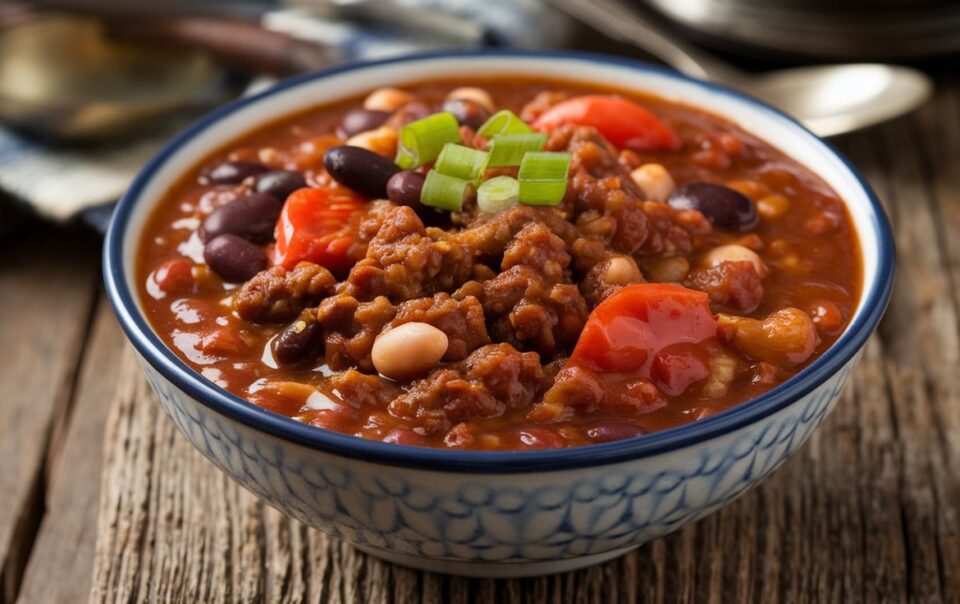
- Vegetarian chili
- Taco filling
- Stuffed peppers
- Sloppy joes
As it simmers, the TVP absorbs the sauce and seasonings, making it an easy way to increase protein without changing the flavor of your meal. It delivers a substantial amount of protein without adding much extra volume, making it easier to hit your protein goals even when you’re eating smaller meals.
Snack on Roasted Edamame Instead of Crackers
When you’re craving something crunchy, it’s easy to reach for crackers, pretzels, or chips. Roasted edamame delivers that same satisfying crunch while packing in far more protein and fiber.
Adds 14 grams of protein
- ¼ cup roasted edamame: 14g
Roasted edamame is perfect for:
- Afternoon snacks
- Lunch boxes
- Road trips
- Desk drawers at work
- Tossing on top of salads for extra crunch
Unlike many crunchy snack foods, it helps keep you full instead of leaving you hungry again an hour later.
I’ve found that small, high-protein snacks are often much easier to finish than a full meal, especially on those lower-appetite days.
13. Toss Seitan Into Stir-Fries
If you eat gluten, seitan is one of the highest-protein vegetarian foods available. It has a hearty, chewy texture that’s often compared to chicken, making it an excellent addition to quick weeknight dinners.
Adds 20–21 grams of protein
- 3 ounces seitan: 20–21g (amazing!)
Try it in:
- Vegetable stir-fries
- Fajitas
- Grain bowls
- Wraps
- Noodle dishes
Because it cooks in just a few minutes, it’s an easy protein option when dinner needs to come together quickly.
A relatively small serving delivers an impressive amount of protein, helping support muscle without requiring a large meal. If you avoid gluten, choose tofu, tempeh, or edamame instead.
14. Stir Cottage Cheese Into Mashed Potatoes or Cauliflower Mash
Mashed potatoes and cauliflower mash are comfort-food favorites, but they don’t contribute much protein on their own. Blending in cottage cheese makes them creamier while giving them a meaningful protein boost.
Adds 14 grams of protein
- ½ cup low-fat cottage cheese: 14g
Blend the cottage cheese until smooth before stirring it into:
- Mashed potatoes
- Mashed cauliflower
- Sweet potato mash
- Twice-baked potatoes
You’ll end up with a creamier texture and a side dish that works much harder nutritionally.
Great for GLP-1 vegetarian users: This is an easy way to add protein to a meal without increasing portion size or changing the flavor very much.
15. Top Pizza with Extra Protein
Pizza night doesn’t have to derail your protein goals. A few simple additions can turn it into a much more balanced meal while keeping all the flavors you love.
Adds 18 grams of protein
- ½ cup low-fat cottage cheese (blended into the sauce): 14g
- 2 tablespoons grated Parmesan: 4g
You can also add:
- Baked tofu
- Edamame
- Vegetarian sausage
- Extra mozzarella
- Spinach and mushrooms
Those small additions can make a surprising difference, helping you enjoy pizza while getting much closer to your daily protein goal.
Love that you don’t have to give up your favorite foods—you just need to make them work a little harder for you.
Tiny Changes Can Add Up to 100 Grams of Protein
When you’re taking a GLP-1 medication, getting enough protein isn’t about finding one magical food. It’s about making smarter choices throughout the day.
Think about what happens if you make just a few of these upgrades:
- Add Greek yogurt and hemp hearts to your oatmeal (+24g)
- Swap regular pasta for black bean pasta (+17g)
- Blend silken tofu into your afternoon smoothie (+18g)
- Snack on roasted edamame instead of crackers (+14g)
Without eating significantly more food, you’ve added more than 70 grams of extra protein to your day.
That’s the power of protein layering. Instead of forcing yourself to eat larger portions when your appetite is low, you’re making every meal and snack work a little harder. For many vegetarians taking Ozempic, Wegovy, or Zepbound, that’s a much more realistic—and sustainable—approach to meeting daily protein goals.
If reaching 100 grams of protein has felt impossible, don’t try to change everything overnight. Pick one or two ideas from this list this week, then add another next week. Those small habits can make a surprisingly big difference over time.
Frequently Asked Questions
How much protein should vegetarians on GLP-1 medications eat?
Protein needs vary based on your age, weight, activity level, and medical history. However, many healthcare providers recommend aiming for 25 to 30 grams of protein per meal or approximately 80 to 100 grams per day while taking a GLP-1 medication. If you’re unsure what your target should be, talk with your healthcare provider or a registered dietitian.
Do I need protein powder to get enough protein?
Not at all. While protein powders and ready-to-drink shakes can be convenient—especially on low-appetite days—many vegetarians can meet their protein needs through foods like Greek yogurt, cottage cheese, tofu, edamame, lentils, seitan, TVP, and high-protein bean-based pastas. Protein supplements are simply another tool, not a requirement.
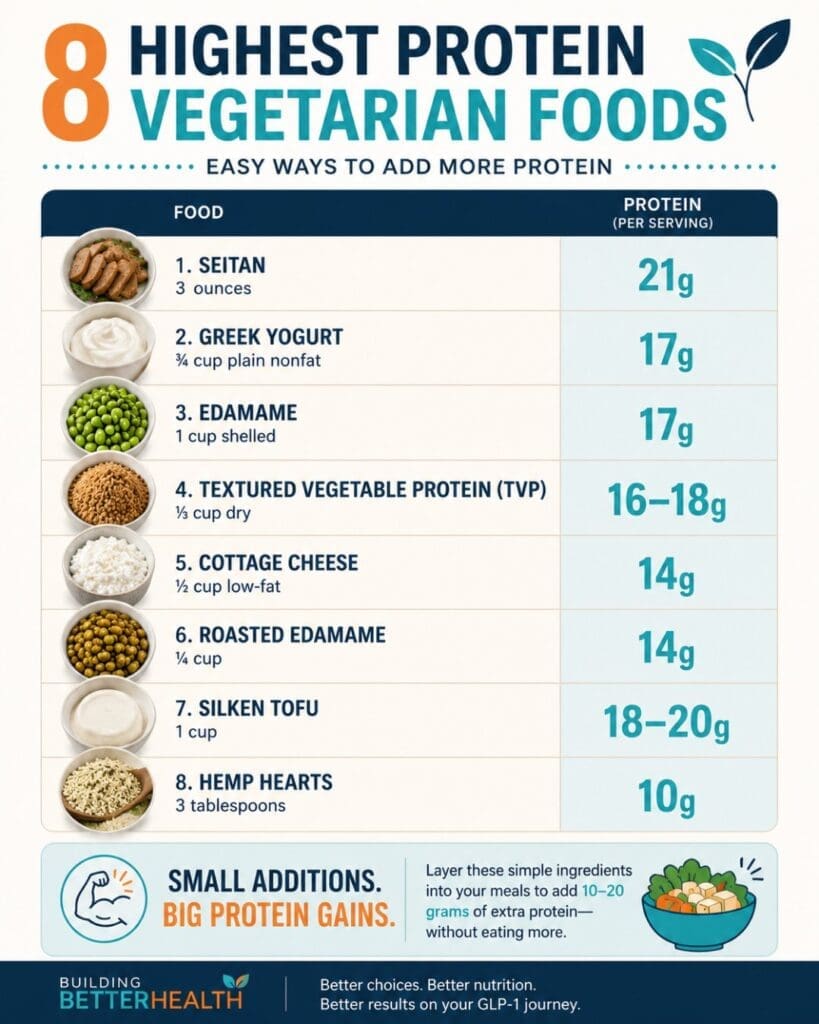
What are the highest-protein vegetarian foods?
Some of the best vegetarian protein sources include: Textured Vegetable Protein (TVP), Greek yogurt,
Cottage cheese, Seitan, Extra-firm tofu, Tempeh and Edamame (see our cheat sheet above!). Combining several of these foods throughout the day is often the easiest way to consistently reach your protein goal.
Why is protein so important on GLP-1 medications?
GLP-1 medications like Wegovy and Zepbound help you eat less, which can make it harder to consume enough protein. Prioritizing protein helps support muscle mass during weight loss, promotes fullness, and can make it easier to meet your nutritional needs when you’re eating smaller portions.
Final Thoughts
One of the biggest challenges of following a vegetarian diet on a GLP-1 medication isn’t knowing that protein is important—it’s figuring out how to eat enough of it when you’re simply not that hungry.
Fortunately, you don’t have to overhaul your diet or spend hours in the kitchen. A few simple additions, smart swaps, and protein layering strategies can dramatically increase the nutrition of meals you’re already making.
Whether you start by stirring Greek yogurt into oatmeal, switching to bean-based pasta, blending silken tofu into smoothies, or keeping roasted edamame in your pantry for snacks, every small change moves you one step closer to your protein goal.
Remember, you don’t have to be perfect. Consistently adding 10 to 20 grams of extra protein here and there is often all it takes to build healthier meals that support your weight-loss journey while helping you feel your best.
Up next: If you’re wondering how all of these ideas fit together, check out our guide on How to Eat 100 Grams of Protein a Day as a Vegetarian on GLP-1 Medications, where we put these strategies into a full day of easy, realistic meals.
Please note: This website contains affiliate links. As an Amazon Associate, we earn from qualifying purchases at no additional cost to you.