Please note: This website contains affiliate links. As an Amazon Associate, we earn from qualifying purchases at no additional cost to you.
If you’re taking a GLP-1 medication like Ozempic®, Wegovy®, Mounjaro®, or Zepbound®, you’ve probably discovered that nausea has a mind of its own.
It might hit the day after your weekly injection, creep in first thing in the morning, or appear after just a few bites of food. For many people, it’s one of the most frustrating side effects of an otherwise life-changing medication.
The tricky part is that staying hydrated—which should help—can sometimes feel impossible. A few big gulps of water may leave you feeling even more nauseated, and many popular sports drinks are packed with sugar, artificial sweeteners, or concentrated electrolytes that don’t always sit well in a stomach that’s emptying much more slowly than usual.
The good news? A gentler approach often works better.
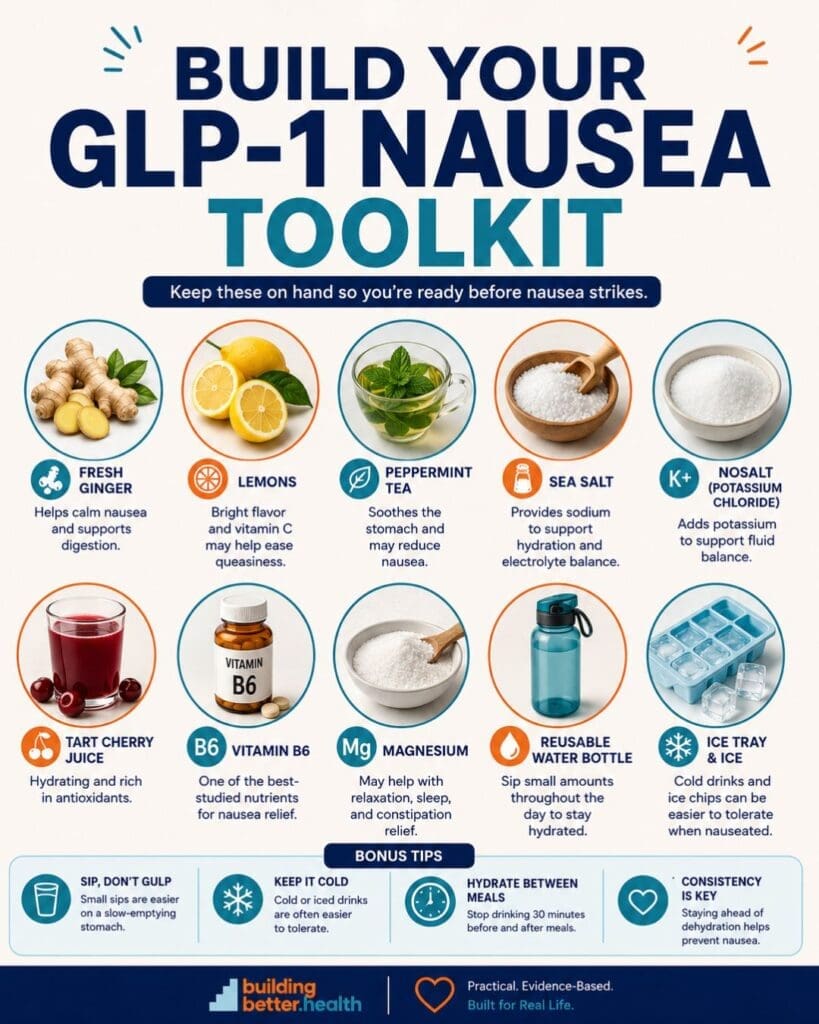
Instead of reaching for overly sweet sports drinks or chugging plain water, many people find relief with lightly flavored, homemade electrolyte drinks that combine moderate amounts of sodium and potassium with ingredients that have been studied for their ability to ease nausea. Ginger, peppermint, vitamin B6, lemon, and magnesium can all play a role when they’re paired with smart hydration habits.
In this guide, you’ll learn:
- Why GLP-1 medications commonly cause nausea and dehydration
- Why plain water and some commercial electrolyte drinks can sometimes make nausea worse
- Simple hydration strategies that are easier on a slow-emptying stomach
- Three DIY electrolyte drink recipes designed specifically for GLP-1 users
- How these homemade recipes compare with popular store-bought options
- When it’s time to call your healthcare provider
Whether you’re navigating your first injection or you’ve been taking a GLP-1 medication for months, these recipes and hydration tips can help you stay more comfortable while continuing to nourish your body.
The Science: Why GLP-1s Cause Nausea (and How Fluids Help)
GLP-1 receptor agonists work by mimicking a hormone your body naturally produces after eating. One of their primary effects is slowing gastric emptying, which means food and liquids remain in your stomach longer than they normally would. At the same time, these medications signal your brain that you’re full, helping reduce appetite and food intake.
While those effects are a big part of why GLP-1 medications are so effective, they can also create the perfect environment for nausea. Here’s what happens:
Your thirst signals become less noticeable.
Because your stomach stays full longer, you may simply feel less interested in drinking. Many people don’t realize they’re becoming mildly dehydrated until they notice symptoms like headache, fatigue, dizziness, constipation, or worsening nausea.
Mild dehydration can make nausea feel worse.
When you’re even slightly dehydrated, your digestive system doesn’t function as efficiently. Stomach contents move more slowly, stomach acid may become more irritating, and the cycle of dehydration and nausea can begin feeding itself.
Large drinks can overwhelm a slow-moving stomach.
One of the biggest surprises for many GLP-1 users is that plain water isn’t always the answer—especially if it’s consumed quickly. Drinking a large glass of water all at once stretches the stomach, which can increase feelings of fullness, reflux, or nausea.
Highly concentrated drinks aren’t always your friend.
Many commercial electrolyte drinks are designed for athletes replacing large amounts of sweat or people recovering from significant dehydration. While they can absolutely be helpful in the right situations, some people taking GLP-1 medications find that highly concentrated drinks—especially those high in sodium, sugar, or sugar alcohols—feel heavy in the stomach and are more difficult to tolerate.
Signs You May Need Electrolytes Instead of Plain Water
If you’ve been vomiting, experiencing diarrhea, sweating heavily, or simply haven’t been able to eat or drink much because of nausea, plain water may not be enough on its own.
You may benefit from an electrolyte drink if you notice:
- Frequent dizziness or lightheadedness when standing
- Headaches that don’t improve after drinking water
- Muscle cramps or muscle twitching
- Extreme fatigue
- Dark yellow urine
- Dry mouth or persistent thirst
- Reduced urination
If your symptoms are severe or you’re unable to keep fluids down for more than 24 hours, contact your healthcare provider.
The Golden Rules of GLP-1 Sip Therapy
Before diving into the recipes, keep these four simple hydration habits in mind. They can make a big difference in how your stomach tolerates fluids while you’re taking a GLP-1 medication.
Sip, Never Gulp
Drinking a large glass of water all at once can stretch your stomach and make nausea or acid reflux worse. Instead, take small, frequent sips throughout the day. Slow and steady is almost always easier on a GLP-1 stomach.
Keep It Cold or Iced
Cold drinks are often easier to tolerate than warm or room-temperature beverages. Ice-cold water, chilled herbal tea, or electrolyte drinks served over ice can help reduce strong flavors and make sipping more comfortable.
Hydrate Between Meals
Try to avoid drinking large amounts of fluid 30 minutes before, during, or immediately after meals. Since your stomach empties more slowly on a GLP-1 medication, drinking between meals can feel much more comfortable and leaves more room for protein-rich foods.
Choose Gentle Electrolytes
Many commercial sports drinks are designed for endurance athletes or people recovering from significant fluid loss. If you’re dealing with mild GLP-1 nausea, a lightly flavored drink with moderate amounts of electrolytes is often easier to tolerate than highly concentrated sports drinks or electrolyte packets.
3 DIY Anti-Nausea Electrolyte Recipes
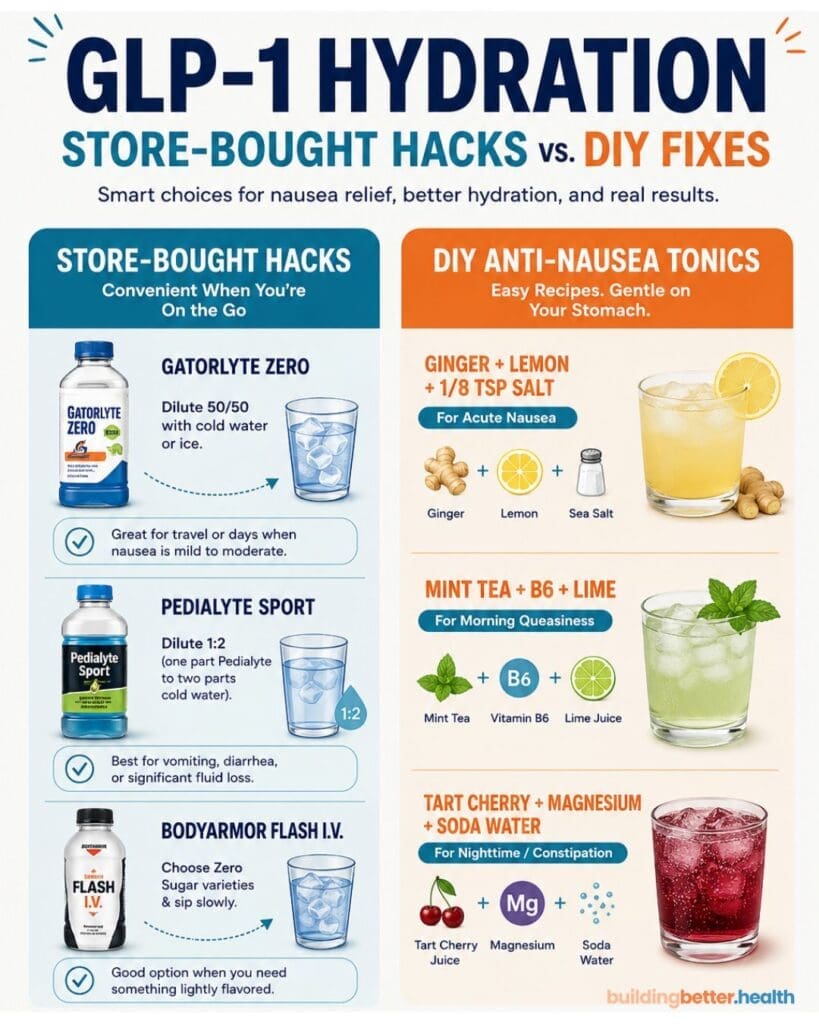
1. The Ginger-Citrus Nausea Saver
Best for: Active nausea, injection day, or anytime your stomach feels unsettled.
Ginger is one of the best-studied natural remedies for nausea. Research suggests its active compounds, gingerols and shogaols, help calm the digestive tract. Combined with fresh lemon and a small amount of sodium, this refreshing drink helps replenish fluids while being gentle on a sensitive stomach.
Ingredients
- 12–16 ounces cold water
- 1–2 tablespoons fresh ginger juice or ginger tea made by steeping 4–5 thin slices of fresh ginger for 10 minutes, then chilling
- 1 tablespoon fresh lemon or lime juice
- ⅛ teaspoon fine sea salt (about 250–300 mg sodium)
- Optional: 1 teaspoon honey or a few drops of liquid monk fruit sweetener
Instructions
- Combine the ginger, lemon juice, and sea salt.
- Stir until dissolved.
- Add cold water and pour over ice.
- Sip slowly over 30–45 minutes.
2. The Peppermint & Vitamin B6 Tonic
Best for: Morning nausea, injection day, or an upset stomach after eating.
Peppermint has long been used to help soothe digestive discomfort, while vitamin B6 is one of the best-researched non-prescription nutrients for nausea. Together they create a cooling drink that’s especially helpful when your stomach feels sour or unsettled.
Note: If you’re already taking a B-complex vitamin, check with your healthcare provider before adding additional vitamin B6.
Ingredients
- 12–16 ounces chilled peppermint tea
- ⅛ teaspoon fine sea salt (about 250–300 mg sodium)
- 1/16 teaspoon potassium chloride (“NoSalt”)
- 25 mg vitamin B6
- Squeeze of fresh lime juice
Instructions
- Brew peppermint tea and chill completely.
- Stir in the remaining ingredients.
- Serve over ice and sip slowly.
3. The Tart Cherry & Magnesium Nightcap
Best for: Evening hydration, nighttime nausea, or occasional GLP-1-related constipation.
If nausea tends to flare in the evening, this lightly sparkling drink can be a soothing way to end the day. Tart cherry juice adds a refreshing flavor, while magnesium may help support regular bowel movements. If you’re prone to loose stools, magnesium glycinate is generally gentler than magnesium citrate.
Ingredients
- 2 ounces unsweetened tart cherry juice concentrate
- 10–12 ounces chilled sparkling water (or still water)
- ⅛ teaspoon fine sea salt
- 100–200 mg magnesium glycinate or magnesium citrate powder
Instructions
- Combine the tart cherry juice, sea salt, and magnesium.
- Slowly pour in the sparkling water.
- Stir gently and sip 45–60 minutes before bed.
Quick Comparison: DIY Recipes vs. Commercial Products
| Option | Best For | Approx. Sodium | Why It Works |
|---|---|---|---|
| Ginger-Citrus Nausea Saver | Injection day, active nausea | 250–300 mg | Ginger and lemon help soothe an upset stomach. |
| Peppermint & Vitamin B6 Tonic | Morning nausea | 250–300 mg | Cooling peppermint plus vitamin B6. |
| Tart Cherry & Magnesium Nightcap | Evening nausea & constipation | ~250 mg | Gentle hydration plus magnesium support. |
| Gatorlyte Zero | Convenient travel option | ~490 mg | Consider diluting if it feels too concentrated. |
| Pedialyte Sport | Vomiting or diarrhea | 370–490 mg | Best reserved for significant fluid loss. |
When to Call Your Doctor
Mild nausea is common when starting a GLP-1 medication or increasing your dose. However, persistent vomiting or dehydration can become serious.
Contact your healthcare provider if you experience:
- Inability to keep liquids down for more than 24 hours
- Severe or persistent vomiting or diarrhea
- Dizziness, lightheadedness, or fainting
- Very dark urine or little to no urination for eight hours or longer
- Severe abdominal pain, especially if it radiates to your back
Summary Checklist for GLP-1 Hydration Success
- Aim for about 2–3 liters of fluid daily (unless otherwise directed by your healthcare provider).
- Sip fluids slowly instead of drinking large amounts at once.
- Choose cold or iced drinks if they’re easier to tolerate.
- Hydrate between meals.
- Look for electrolyte drinks with moderate sodium levels.
- Keep ginger, peppermint, lemon, and vitamin B6 on hand for nausea flare-ups.
- Don’t wait until you’re dehydrated to start drinking.
Frequently Asked Questions (FAQ): GLP-1 Hydration & Nausea
Why is vitamin B6 frequently recommended for nausea?
Vitamin B6 (pyridoxine) is one of the best-studied non-prescription nutrients for nausea. It’s widely recommended for pregnancy-related nausea and may also help some people experiencing nausea from GLP-1 medications.
Why does plain water sometimes make my nausea worse?
It’s usually not the water itself—it’s how quickly you drink it. Large amounts of water can overfill a stomach that’s already emptying slowly. Small, frequent sips of ice-cold water are often much better tolerated.
Can I use store-bought electrolyte drinks instead?
Yes. Products like Gatorlyte Zero or Pedialyte can be convenient options. If they feel too concentrated, try serving them over plenty of ice or diluting them with cold water.
What is the biggest hydration mistake people make?
Waiting until they’re already dehydrated. Staying ahead of dehydration with small, frequent sips is usually much easier than trying to catch up later.
Are there any ingredients I should avoid?
Some people find these ingredients make symptoms worse:
- Large amounts of added sugar
- Sugar alcohols like erythritol, xylitol, and sorbitol
- Highly concentrated electrolyte mixes when only mildly dehydrated
- Excess caffeine when nausea is already present
When is the best time to drink an electrolyte beverage?
Many people find these times especially helpful:
- First thing in the morning
- The day of their injection and the following day
- Between meals
- After vomiting or diarrhea
Final Thoughts
Nausea doesn’t have to derail your progress on a GLP-1 medication. A few simple adjustments—like sipping fluids instead of gulping them, choosing gentle electrolyte drinks, and staying ahead of dehydration—can make a noticeable difference in how you feel.
These homemade recipes are inexpensive, easy to customize, and made with ingredients you may already have in your kitchen. Experiment with the recipes, find the flavors that work best for you, and keep a pitcher in the refrigerator so you’re always prepared for those tougher days after your injection.
Small, consistent habits often have the biggest impact—and staying comfortably hydrated is one of the simplest ways to help your body adjust to life on a GLP-1 medication.
Please note: This website contains affiliate links. As an Amazon Associate, we earn from qualifying purchases at no additional cost to you.