

Please note: This website contains affiliate links. As an Amazon Associate, we earn from qualifying purchases at no additional cost to you.
A close friend of mine lost 110 pounds on Wegovy.
But the part of her story I think about most isn’t the weight loss. It’s the day she told me her Wegovy stopped working — because that belief, more than anything else, is what shaped how her story ends.
I’m going to call her Katie. That’s not her real name, but everything else here is true, including the ending — which isn’t the one you’re expecting, and isn’t the one either of us wanted.
I’m sharing it because if you’re on Wegovy, Zepbound, or another GLP-1 and you’ve noticed hunger creeping back before your next injection, Katie’s story might be the most useful thing you read all week. I’m on a GLP-1 myself, so I know that day-six feeling firsthand. But watching Katie’s journey from the outside taught me things about these medications that I never would have learned from my own.
Where Katie Started
Before Wegovy, Katie needed to lose somewhere in the neighborhood of 150 to 200 pounds. And like so many of us who have struggled with weight for years, food had become much more than fuel for her.
It was comfort after stressful days. Celebration during happy ones. Distraction during boring ones. It was the thing she reached for when life felt like too much.
Here’s a truth worth saying plainly: nobody gets here by accident. Food was doing a job. For Katie — for me, for most of us — it was managing stress, softening loneliness, and getting us through hard seasons. That’s not weakness. That’s a coping mechanism doing exactly what coping mechanisms do.
The problem is that no medication on earth removes the need to cope. It only mutes what happens when you reach for the old solution.
Neither of us understood that yet.
The First Five Days Felt Almost Magical
When Katie started Wegovy, the change was dramatic — and if you’ve taken a GLP-1, you know exactly what I mean.
The constant pull toward food went quiet. Portions shrank naturally. The exhausting internal negotiation — Am I actually hungry? Am I just stressed? Should I eat that? — finally stopped. For the first time in years, weight loss didn’t feel like a battle she had to fight every waking hour.
The weight came off steadily. Watching from the outside, I was thrilled for her. By every visible measure, the medication was working exactly as intended.
But here’s what I can see now that neither of us saw then: nothing was changing underneath.
She wasn’t eating with any real structure — the smaller portions were the medication’s doing, not hers. Protein wasn’t a priority. She wasn’t moving her body consistently. And the emotional eating triggers were still there, quietly waiting under the appetite suppression. Stress still felt stressful. Boredom still felt boring. She just wasn’t acting on it.
For now.
The Weekly Pattern That Started It All
After several months, Katie noticed that every week followed the same rhythm — and she’d tell me about it, half confused, half worried.
For roughly five days after her injection, appetite suppression felt strong and food noise stayed comfortably in the background. Then, in the final day or two before her next dose, everything shifted. Hunger got louder. Food thoughts crept back. Cravings that had vanished earlier in the week quietly reappeared.
And more often than not, the old patterns followed — the grazing, the comfort foods, the eating that had nothing to do with hunger.
This wasn’t a willpower failure, and it wasn’t the medication malfunctioning. GLP-1 levels naturally taper toward the end of the weekly dosing cycle, so many people feel still hungry on semaglutide or tirzepatide before their next injection. (I’ve written about my own version of this pattern — and the 48-hour reset routine I use before shot day — because I live it too.) Those final two days are simply when the medication steps back slightly — and whatever habits exist underneath have to step forward.
The problem was that there weren’t many habits underneath yet.
Katie assumed something was wrong. Maybe the medication was failing? Maybe she needed a higher dose? If you’ve spent any time in GLP-1 communities, you know exactly how common those thoughts are.
Chasing Complete Silence
Like a lot of GLP-1 users, Katie gradually began to see hunger itself as the enemy.
The quiet she felt in those first days after each injection was so freeing that naturally, she wanted more of it. If a lower dose reduced food noise, surely a higher dose could eliminate it altogether. So she moved up through the Wegovy doses, eventually reaching the highest dose.
At first, it seemed to work. Stronger suppression. Quieter cravings. Life felt easier.
But chasing complete silence came with a hidden cost that neither of us recognized at the time. Every dose increase was another way to postpone the harder work — and once she reached the top, there was nowhere left to go. No higher dose waiting.
And still no skills built for the days when hunger showed up anyway.
Does Wegovy Stop Working Over Time?
One day Katie said the sentence to me that so many long-term GLP-1 users eventually say:
“It doesn’t work like it used to.”
But that wasn’t entirely true, and it’s worth being precise about why.
The medication was still slowing her digestion. Still helping with portions. Still keeping food noise far quieter than where she’d started. What had actually changed was her expectation — the belief that the medication would carry the entire process, indefinitely, on its own.
This is the thing I most want you to take from her story: a medication working differently over time is normal, not broken. If your only definition of “working” is total silence from hunger, you will eventually feel like your medication failed you — even while it’s still doing most of its job.
What Katie was really facing was the question every GLP-1 user eventually meets:
What happens when the medication stops doing all of the heavy lifting?
Why Do People Regain Weight on GLP-1s?
Over time, some of Katie’s weight came back. About 25 pounds, as of the last time we talked about numbers.
Let me say this clearly, because it matters: weight regain is not moral failure. Katie isn’t lazy, weak, or incapable — she’s one of the strongest people I know.
The regain was information. It was feedback. It showed exactly where the medication had created opportunity, and exactly where the skills, structure, and coping tools had never been built. (If the scale has stalled or reversed for you, these tips for keeping weight off on semaglutide cover the same ground from a practical angle.)
GLP-1 medications are powerful tools, but they are not habit-builders. They don’t teach you how to eat. They don’t manage your stress. They don’t replace emotional eating with healthier coping — they just mute it for a while. And they can’t teach you what to do when hunger returns or when life gets hard.
What they can do is create space. A quieter mind. A window.
What happens inside that window is up to us.
How Katie’s Story Actually Ends
Here’s where I’m supposed to tell you about Katie’s turnaround. The moment she started meal prepping, found a therapist, discovered walking, and learned to love protein.
That moment never came.
Katie is still on the highest dose of Wegovy. She’s still fighting the same two days before every shot, the same way, with the same results. The habits never got built. The eating never changed. Food is still where her stress goes. She lost 110 pounds and never built a single habit underneath it — and now the window that made building them easy has mostly closed.
The medication kept its promise. It created years of space. The space just stayed empty.
I love my friend, and I’m not sharing this to shame her. Change is hard, and she may still get there — the door is never fully shut. I’m sharing it because her story is the honest version of a story that usually gets a fake happy ending. And the fake version doesn’t protect anyone.
Watching her taught me exactly what I’d want to do differently. Maybe that can be her gift to you.
What I Learned Watching Her: The 3 Skills the Medication Can’t Build
Everything I now believe about GLP-1s comes down to this: those final 48 hours before shot day aren’t the problem. They’re the feedback. They show you — every single week — exactly where the work still needs to happen, while the stakes are still low.
Think about it: the two days before your injection are the only time you get to rehearse life with less medication support while still having a safety net. The suppression is lighter, but it hasn’t disappeared. That makes those days a weekly practice run for every high-stakes moment ahead — the vacation, the pharmacy shortage, the insurance battle, maintenance dosing, or life after medication if you ever choose to stop.
Here’s what that practice needs to cover.
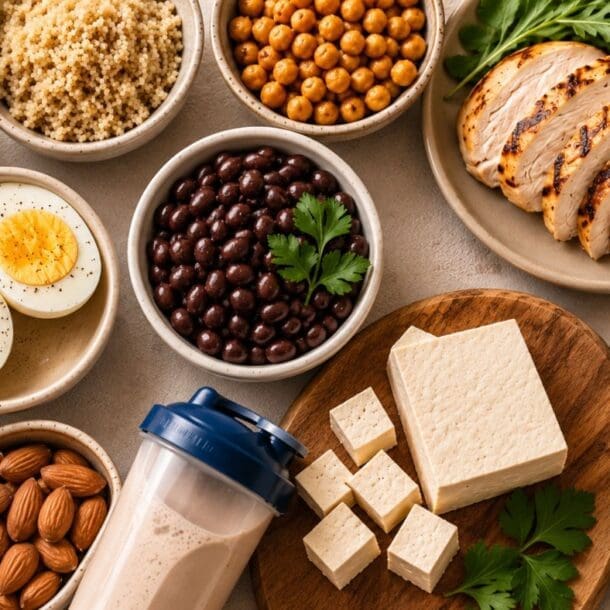
#1 | EATING SKILLS: Protein before perfection
On higher-hunger days, forget eating perfectly and ask one simple question instead: Have I had enough protein yet?
Leading with protein — and fiber right behind it — keeps you fuller longer, steadies blood sugar, and quiets cravings the natural way, which matters most on exactly the days the medication is quieting them least. (Not sure where you stand? Here’s how much protein you should actually eat and easy ways to increase your fiber intake.)
And structure beats willpower every time. A rough meal plan — even an imperfect one — means fewer food decisions, less decision fatigue, and fewer openings for old habits to sneak back in. The days before shot day are the worst days to wing it.
#2 | EMOTIONAL SKILLS: Stress still needs somewhere to go
This is the one almost nobody talks about, and it’s the one that defined Katie’s story.
If food was your coping mechanism before the medication — and for most of us, it was — those feelings didn’t go anywhere. The stress, the loneliness, the boredom: they’ve just been waiting for the volume to come back up.
The quiet months on a GLP-1 are the single best chance you will ever have to do this work. Your triggers still fire, but they have less power over you — which means you can actually observe them, name them, and practice new responses while the stakes are low. A walk outside. A phone call. Journaling. Stepping away from the desk.
None of it is magic; all of it is rewiring. If this is your pattern too, start with how to stop emotional eating and build a few daily habits that relieve stress so the feelings have somewhere else to land. And if the quiet itself feels strange — like losing a part of who you were — I’ve written about rebuilding your relationship with food when the food noise disappears.
Sadly, Katie never used her quiet months for this. That, more than anything else, is why she’s stuck.
#3 | MINDSET SKILLS: Hunger is information, not an emergency
Feeling hungry two days before your next injection doesn’t mean your medication failed. It doesn’t mean regain is inevitable. It doesn’t mean you’re broken. It means you’re approaching shot day — and your body is sending a normal, expected, biological signal.
For those of us who spent years at war with our appetite, learning to feel hunger without panicking might be a bigger transformation than any number on the scale. Hunger becomes a data point instead of an emergency: It’s day six. This is the part of the week where my habits matter more than my medication. I know what to do.
And on those days, consistency matters more than motivation. The two days before shot day will rarely be your most motivated days. They will often be your most important ones. Showing up imperfectly still counts.
If You’re Early in Your GLP-1 Journey, Your Window Is Wide Open
Katie’s window is harder to reopen now. Yours might be wide open.
If you’re in your first months on Wegovy, Zepbound, or another GLP-1, the strongest appetite suppression you will ever experience is happening right now — and it’s the best building weather you’ll ever get:
- Prioritize protein and fiber at every meal — practice it now, while it’s easy (a balanced GLP-1 meal plan makes this nearly automatic)
- Build a simple movement routine that feels sustainable, not punishing
- Watch your emotional eating triggers while the food noise is quiet enough to see them clearly
- Find two or three coping tools that aren’t food and use them even when you don’t “need” to
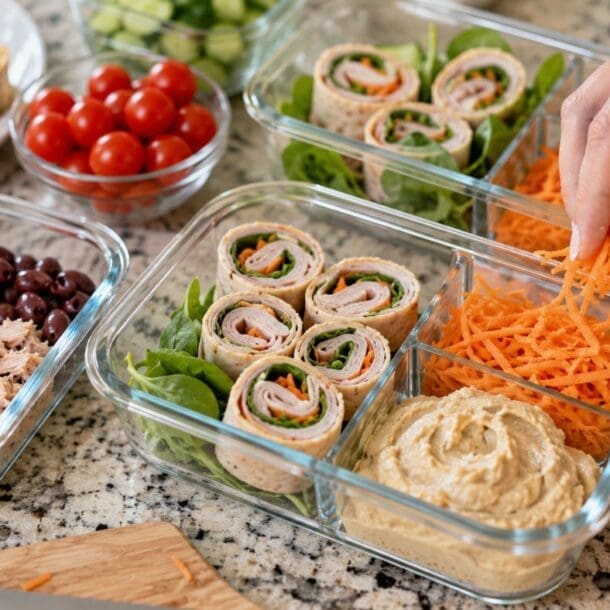
- Make a plan for the 48 hours before shot day — loose meal structure, protein targets, a stocked kitchen (my GLP-1 shopping list helps here), and what you’ll do when cravings knock
- Practice maintenance before you need it, even if maintenance feels years away
The goal isn’t to prepare for failure. The goal is to use the window while it’s open — because the one thing Katie’s story proves is that the window doesn’t stay this open forever.
FAQ: When Wegovy Feels Like It Stopped Working
Did my Wegovy stop working?
Almost certainly not entirely. The medication typically continues slowing digestion and supporting appetite regulation — what usually changes is the dramatic, total suppression many people feel early on. Feeling like it “doesn’t work like it used to” is one of the most common experiences among long-term users, and it’s usually a sign that habits need to share the load, not that the drug failed. If you have concerns about your response, talk to your prescriber.
Why am I hungrier the day before my next Wegovy or Zepbound injection?
Medication levels naturally taper toward the end of the weekly dosing cycle, so many people notice appetite and food noise returning in the final day or two before their next dose. It’s a common, expected pattern — not a sign the medication has stopped working.
Is it normal to regain weight on a GLP-1?
Some regain is common, especially when eating habits, movement, and coping skills haven’t changed alongside the weight. Regain is feedback about where more support is needed — not evidence of personal failure.
What should I do in the 48 hours before shot day?
Lead meals with protein and fiber, follow a loose meal structure instead of deciding on the fly, plan non-food outlets for stress, and treat returning hunger as a signal rather than an emergency. Those two days are your best weekly practice for maintenance.
Does Wegovy lose effectiveness over time?
The medication typically continues slowing digestion and supporting appetite regulation, but the dramatic suppression many people feel early on often becomes less absolute. Experts generally frame this as expectations meeting reality rather than the drug “failing.” If you have concerns about your response, talk to your prescriber.
What should I do when the medication feels weaker?
Lead meals with protein and fiber, follow a loose meal structure instead of deciding on the fly (having high-protein GLP-1 meal prep ready removes the decisions entirely), plan non-food outlets for stress, and treat returning hunger as a signal rather than an emergency. For the days right before your injection specifically, my 48-hour shot day reset walks through exactly what I do.
The Truth About the Window
Katie didn’t fail Wegovy, and Wegovy didn’t fail Katie.
The medication kept every promise it made. It created space. It lowered the volume. It opened a window that allowed 110 pounds of weight loss and years of opportunity to build something lasting.
Nobody told her the window was the whole point.
So let me tell you, friend to friend, the thing I wish someone had told her: if you’re approaching shot day and the hunger feels louder than it did a few days ago, don’t panic — and don’t waste it. You’re in the part of the week where your skills matter more than your suppression. Practice there. Build there. Every single week.
Because GLP-1 medications can open the door.
But they can’t walk through it for us.
This article shares a real personal story (with the name changed) and is for informational purposes only. It is not medical advice. Never adjust your medication dose without talking to your healthcare provider, and always consult your doctor about what’s right for your individual situation.
Please note: This website contains affiliate links. As an Amazon Associate, we earn from qualifying purchases at no additional cost to you.