Please note: This website contains affiliate links. As an Amazon Associate, we earn from qualifying purchases at no additional cost to you.
SUMMARY: Hitting 100 grams of protein on GLP-1 medications doesn’t require big meals — it requires small, frequent wins. Aim for roughly 20 grams five times a day (the 20×5 method), eat on a schedule instead of waiting for hunger, lead with liquid protein when solids sound terrible, and match your food choices to how your appetite feels today. Consistency beats perfection every time.
If you’re taking GLP-1 medications like Wegovy or Zepbound, you’ve probably experienced one of the strangest parts of the journey:
You know you need to eat protein.
You know protein helps preserve muscle, supports your metabolism, helps reduce hair shedding, and can improve energy levels.
But the idea of eating another chicken breast feels almost impossible.
For many GLP-1 users, appetite suppression works a little too well. Suddenly, breakfast becomes coffee, lunch becomes a protein bar, and dinner becomes “whatever sounds tolerable.”
Unfortunately, your nutritional needs don’t disappear just because your hunger does.
The good news: you don’t need giant meals to get there. Instead of forcing yourself to eat 35 to 40 grams of protein three times per day, use a strategy that works with your medication rather than against it.
Why Protein Matters Even More on GLP-1 Medications
Quick foundation before the strategy, because understanding the “why” makes the discipline easier.
When overall calories drop significantly, your body doesn’t only lose fat. Without adequate protein, you can also lose lean muscle mass — and muscle is exactly what you want to protect while losing weight, because it supports:
- Metabolic health and blood sugar regulation
- Strength, mobility, and healthy aging
- Energy levels and exercise recovery
Here’s the part worth sitting with: many of the symptoms people blame on GLP-1 medications — fatigue, weakness, feeling cold, reduced exercise performance, even increased hair shedding — can be made worse by chronically under-eating protein. (If exhaustion is your main complaint, Zepbound fatigue is often a nutrient problem in disguise, and protein is one of the usual suspects. And if meat aversion has pushed you toward an all-dairy protein routine, watch your iron too — dairy protein carries almost none.)
As for the daily protein target: most obesity medicine specialists suggest somewhere in the 80–120 gram range depending on your size and activity, with 100 grams as a practical everyday goal. Here’s how to find your personal protein number if you want to dial it in.
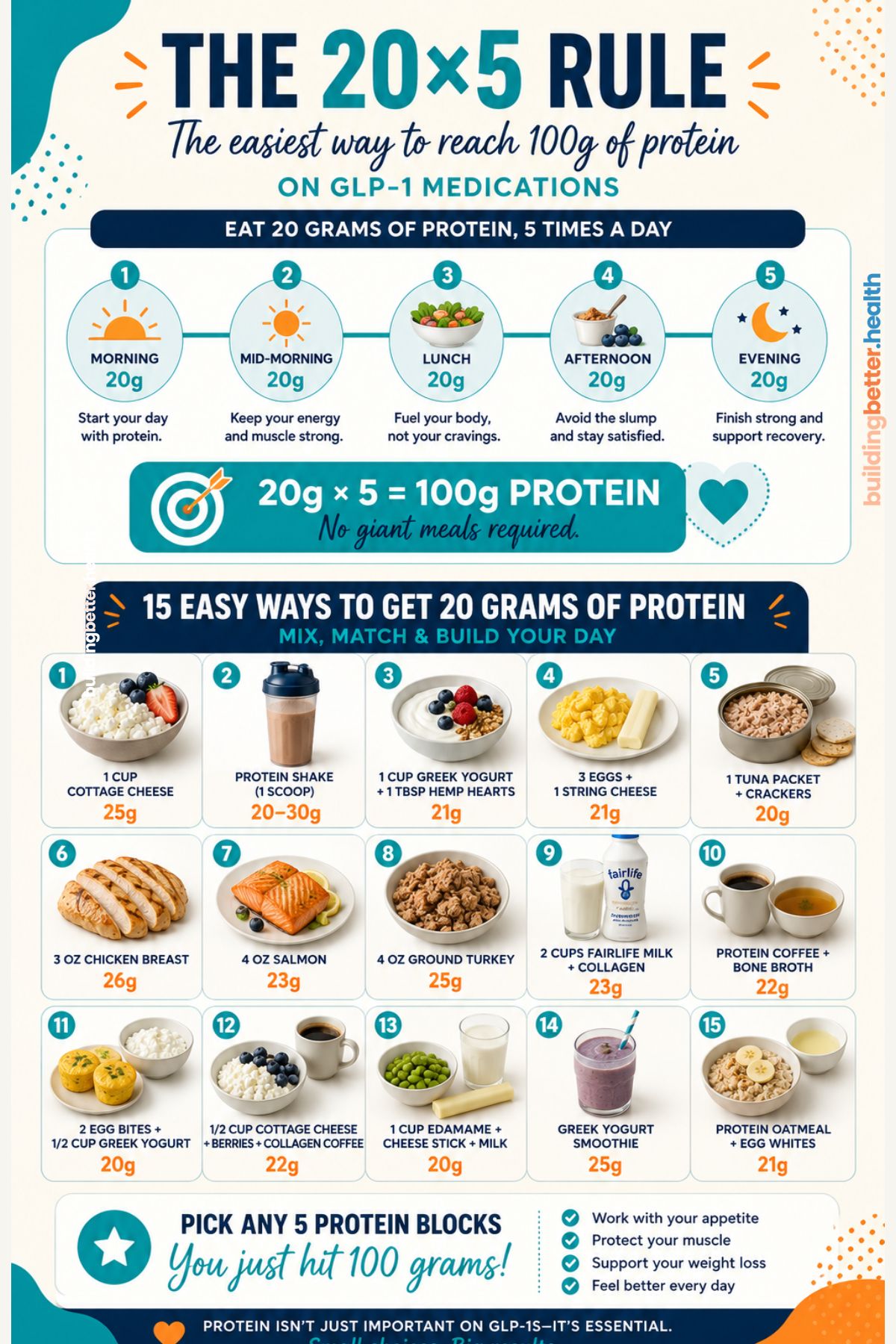
The GLP-1 Protein Strategy: The 20×5 Method
Most people fail because they’re trying to eat protein the same way they did before starting a GLP-1 medication. Large meals become uncomfortable very quickly.
Instead, think smaller and more often:
| Protein Window | Target |
|---|---|
| Morning | 20g |
| Mid-morning | 20g |
| Lunch | 20g |
| Afternoon | 20g |
| Evening | 20g |
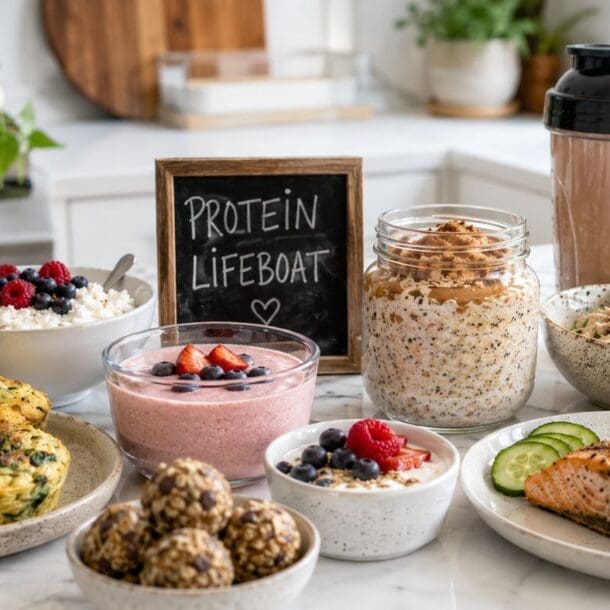
Five small protein wins throughout the day gets you to 100 grams without ever needing to sit down to a huge meal.
For many people on GLP-1 medications, this approach feels dramatically easier than trying to “catch up” with one large dinner your stomach has no room for.
Don’t Wait Until You’re Hungry (Mechanical Eating)
This may be the single biggest mindset shift for GLP-1 users.
Before starting medication, your body told you when to eat. After starting medication, those signals may become very quiet or disappear entirely.
That doesn’t mean your body no longer needs fuel.
Many obesity medicine specialists recommend a technique called mechanical eating: instead of eating when you’re hungry, you eat according to a schedule.
- Set reminders if necessary
- Aim to eat roughly every three hours
- Treat protein the way you treat hydration or your medication schedule — something your body needs regardless of whether your appetite agrees
Start With Liquid Protein First
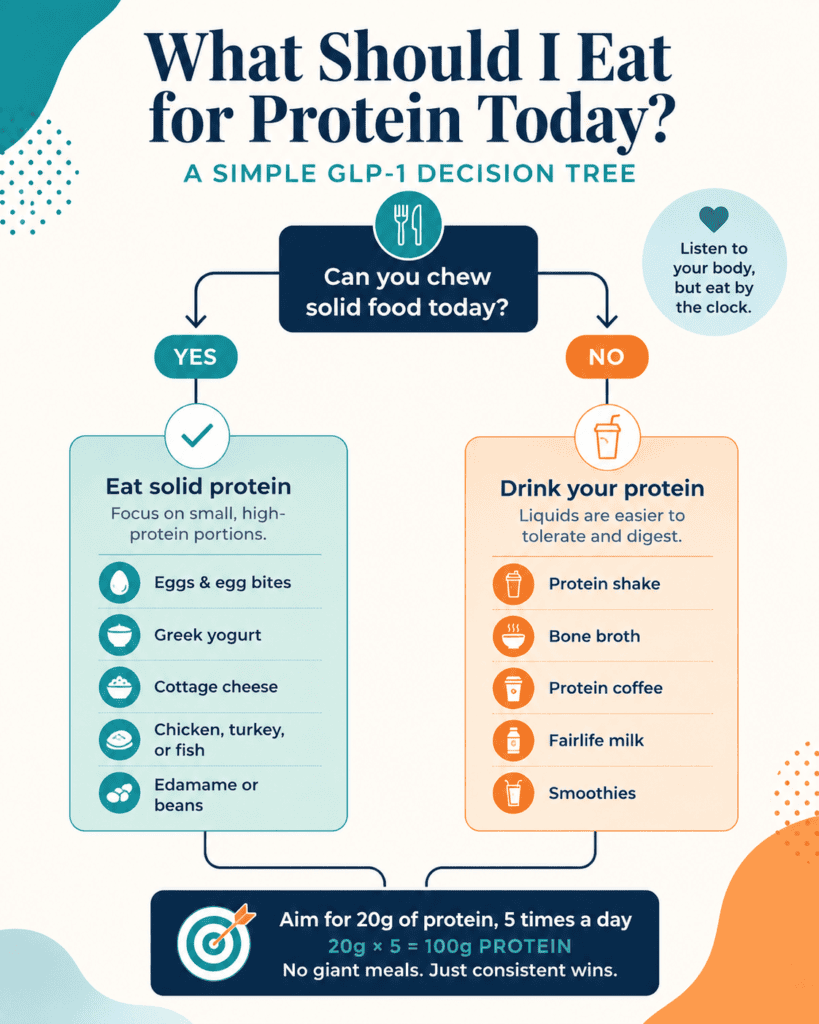
For many people, drinking protein feels much easier than chewing it. Liquid protein tends to feel lighter and less overwhelming, especially during the first few days after injection.
If solid food sounds terrible, start here:
| Liquid Protein Option | Protein |
|---|---|
| Protein shake | 25–30g |
| Fairlife milk (2 cups) | 26g |
| Greek yogurt or cottage cheese smoothie | 20–30g |
| Bone broth (2 cups) | 20g |
| Protein coffee | 20–30g |
| Collagen peptides in coffee | 10–20g |
Getting your first 20 to 30 grams in early often makes the rest of the day much easier — and if plain bone broth bores you, bone broth hot chocolate is the sneakiest comfort-drink protein on this site.
The “I Have Zero Appetite” Protein List
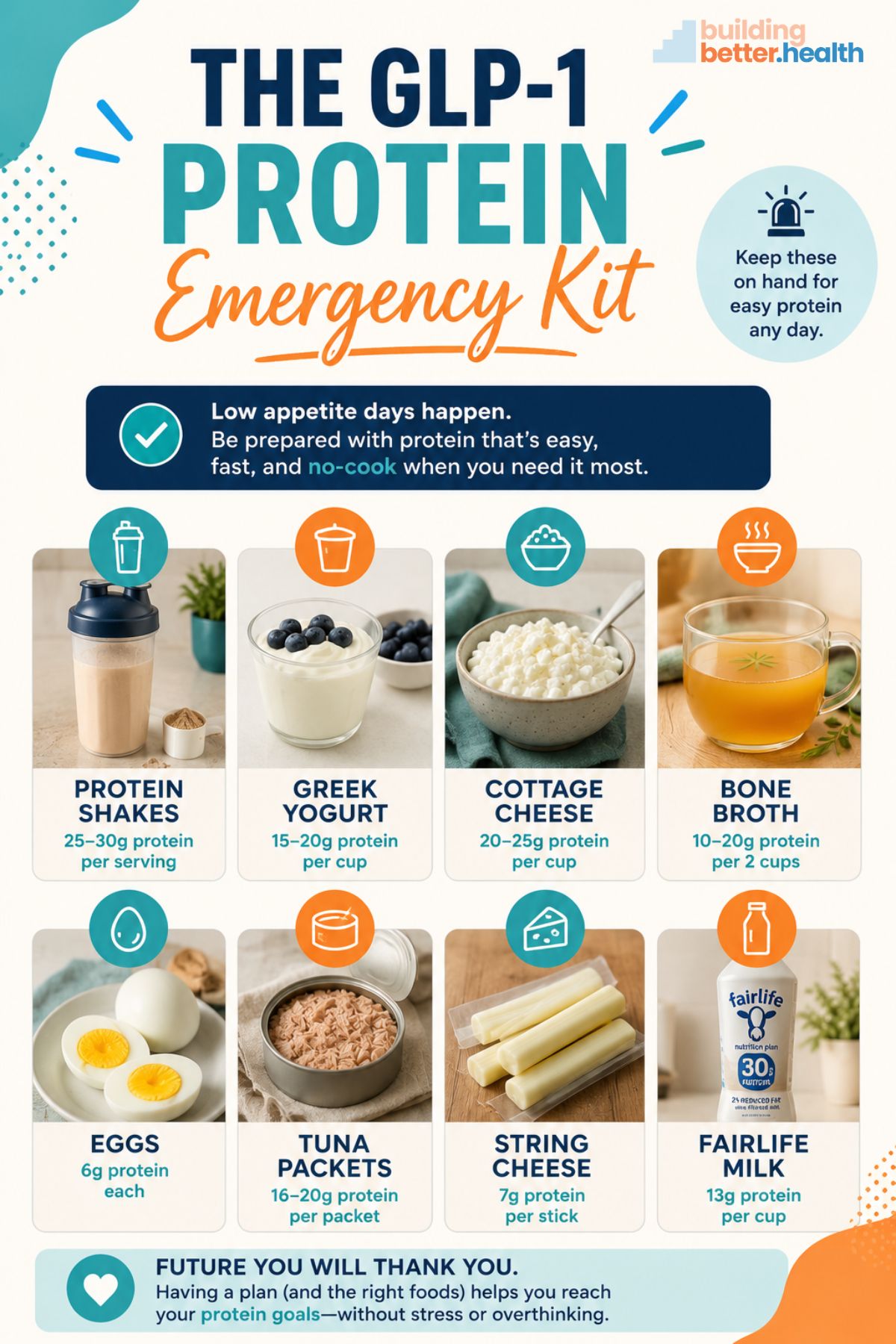
Some days are harder than others. If chewing sounds exhausting, focus on soft foods and liquids:
| Easy Protein Option | Protein |
|---|---|
| Cottage cheese (1 cup) | 25g |
| Greek yogurt (1 cup) | 20g |
| Protein pudding | 20g |
| Bone broth (2 cups) | 20g |
| Protein shake | 25–30g |
| Drinkable yogurt | 10–15g |
| Scrambled eggs (2 large) | 12g |
| Egg drop soup | 10–15g |
The “I Can Handle a Few Bites” Protein List
When your appetite improves slightly, these options provide a lot of protein in very small portions:
| Small Portion Food | Protein |
|---|---|
| Egg bites | 15–20g |
| Edamame (1 cup) | 18g |
| Turkey roll-ups | 15g |
| Beef jerky | 10g |
| String cheese | 7g |
| Cottage cheese cup | 12–15g |
| Tuna packet | 16–18g |
| Hard boiled eggs (2) | 12g |
| Protein balls (2) | 10–14g |
The “My Appetite Is Better Today” Protein List
On the days your appetite cooperates, take advantage of it. These days create breathing room for the lower-appetite days that inevitably happen:
| Meal Option | Protein |
|---|---|
| Chicken breast (4 oz) | 35g |
| Salmon fillet (4 oz) | 30g |
| Lean ground turkey (4 oz) | 28g |
| Cottage cheese bowl | 25g |
| Greek yogurt parfait | 20g |
| Protein wrap | 30g |
| Tuna salad plate | 30g |
| Steak and vegetables | 35g |
Example: A 100-Gram GLP-1 Day
Option One: Shot Day or the Day After
| Time | Food | Protein |
|---|---|---|
| 8:00 AM | Protein coffee with collagen | 22g |
| 11:00 AM | Greek yogurt cup | 15g |
| 2:00 PM | Ground turkey rice bowl | 25g |
| 5:00 PM | Protein shake | 25g |
| 8:00 PM | Bone broth and one egg | 15g |
| TOTAL | 102g |
Option Two: Appetite Is Pretty Normal Today
| Time | Food | Protein |
|---|---|---|
| 8:00 AM | Eggs and high-protein toast | 20g |
| 11:00 AM | Cottage cheese with berries | 25g |
| 2:00 PM | Chicken and vegetables | 35g |
| 5:00 PM | Beef jerky and cheese stick | 15g |
| 8:00 PM | Salmon and quinoa | 30g |
| TOTAL | 125g |
Want a full week of this mapped out? My high-protein meal prep recipes for GLP-1 weight loss turn this from daily decisions into grab-and-go.
Protein Boosters That Do the Heavy Lifting
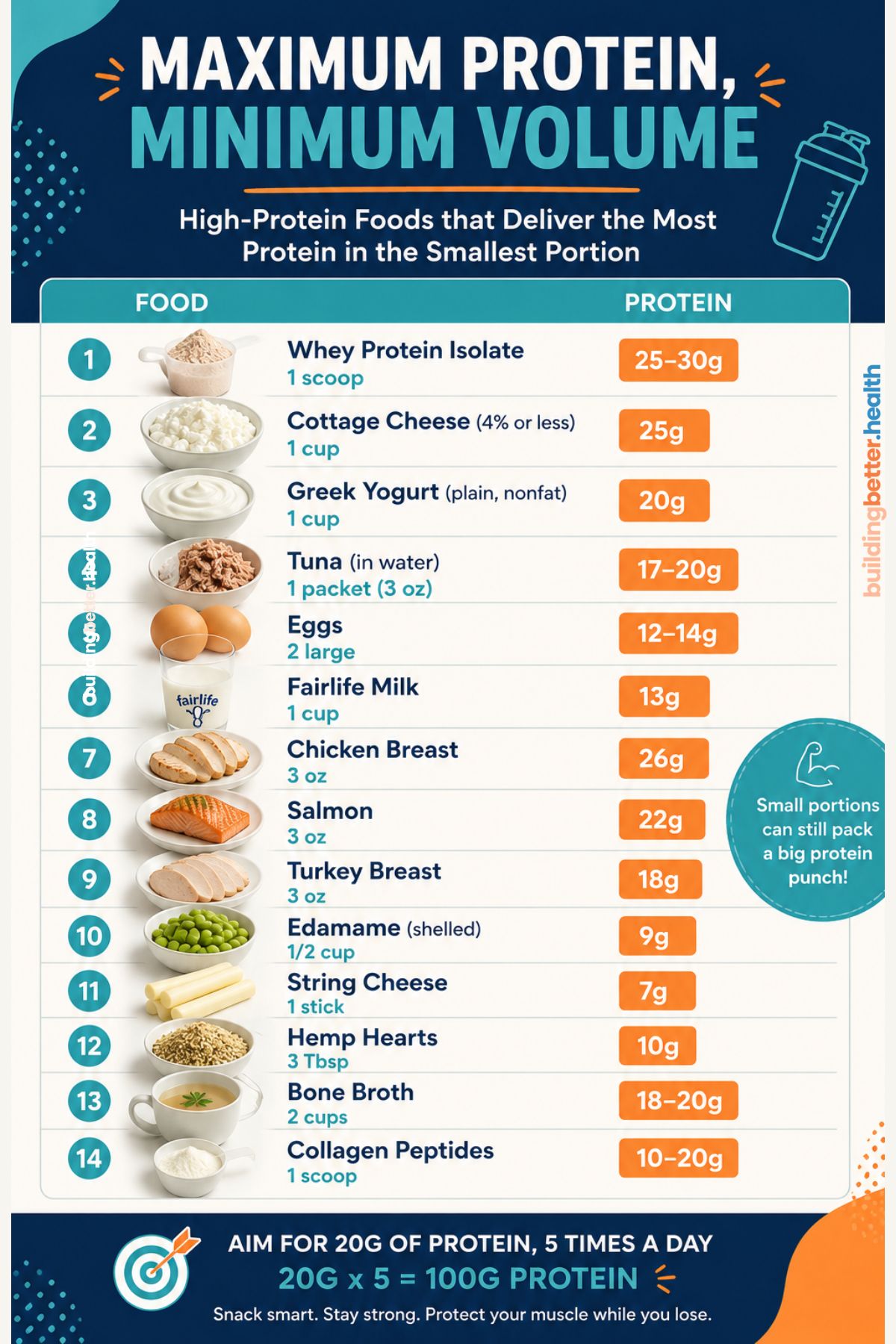
Sometimes the easiest strategy is simply making the foods you’re already eating work harder. These ingredients add 10 to 20 grams of protein without increasing portion sizes much:
| Protein Booster | Serving | Added Protein |
|---|---|---|
| Collagen peptides | 1 scoop | 10–20g |
| Fairlife milk | 1 cup | 13g |
| Carton egg whites | 1/2 cup | 13g |
| Hemp hearts | 3 tbsp | 10g |
| Greek yogurt | 1/2 cup | 10–12g |
| Cottage cheese | 1/2 cup | 12–14g |
| Nutritional yeast | 2 tbsp | 8g |
| Unflavored whey isolate | 1 scoop | 25g |
You Don’t Have to Chew Your Way to 100 Grams
This is probably the most important takeaway.
If chicken sounds terrible today, don’t eat chicken.
Blend cottage cheese into pasta sauce. Add collagen to your coffee. Use Fairlife milk in your oatmeal. Turn Greek yogurt into a smoothie. Sip bone broth.
Drink your protein if that’s what works.
There are no bonus points for forcing yourself through foods that make you feel miserable.
Getting 100g Protein on GLP-1 Medications: Common FAQs
How much protein should I eat while taking GLP-1 medications?
Many obesity medicine specialists recommend approximately 80 to 120 grams of protein per day while taking GLP-1 medications, although individual needs vary based on body weight, age, activity level, and weight-loss goals. Many patients find 100 grams per day is a practical target.
Why is protein so important on GLP-1 medications?
GLP-1 medications significantly reduce appetite and overall calorie intake. Eating enough protein helps preserve muscle mass during weight loss, supports metabolism, improves satiety, and may reduce fatigue and hair shedding.
What if I can’t tolerate meat on Wegovy or Zepbound?
Meat aversions are very common on GLP-1 medications. Protein shakes, Greek yogurt, cottage cheese, eggs, bone broth, protein coffee, and high-protein dairy products can bridge the gap — just keep an eye on iron, since dairy protein contains essentially none.
Is it okay to drink my protein instead of eating it?
Absolutely. Protein shakes, smoothies, protein coffee, and high-protein milk are often easier to tolerate than solid foods, especially during the first few days after your injection.
What exactly is the 20×5 protein method?
The 20×5 method means eating approximately 20 grams of protein five times throughout the day instead of trying to consume large amounts at three meals. Many GLP-1 users find this dramatically easier when appetite is low.
Why am I not hungry on GLP-1 medications?
Reduced appetite is one of the primary ways GLP-1 medications work — they slow gastric emptying and influence hunger signals in the brain, which can make it easy to unintentionally under-eat.
Can not eating enough protein on GLP-1 medications make me feel tired?
Consistently under-eating protein and calories may contribute to fatigue, weakness, poor exercise recovery, and loss of muscle mass during weight loss.
The Goal Isn’t Perfection. It’s Consistency.
One giant meal you can’t finish won’t help you preserve muscle or support your metabolism.
Five small protein wins throughout the day will.
If all you can manage today is protein coffee, yogurt, and a shake, you’re still making progress.
On GLP-1 medications, consistency almost always beats perfection.
And if reaching 100 grams feels impossible right now? Start with 60 grams. Then 75. Then 85. Build the daily habit first — small improvements compound quickly, and your future self will thank you for protecting your muscle while the medication does its job.
This article is for informational purposes only and is not medical advice. Protein needs vary by individual and medical situation — talk to your doctor or a registered dietitian about the right targets for you, especially if you have kidney disease or other conditions affected by protein intake.
Please note: This website contains affiliate links. As an Amazon Associate, we earn from qualifying purchases at no additional cost to you.